
Careful comparison
White Tea vs Green Tea Misconceptions: What Beginners Often Overread
White tea and green tea are worth comparing, but the label is only the first clue. It does not tell you, by itself, how delicate the tea will taste, how pale the liquor should be, whether one is “better,” how the cup will brew, or what the tea can do for your body.
The more useful answer to many white tea vs green tea misconceptions is simple: start with the category, then check the leaves, aroma, liquor, brewing response, storage context, and seller description. The name on the packet can guide your expectations, but it should not replace what the cup shows you.
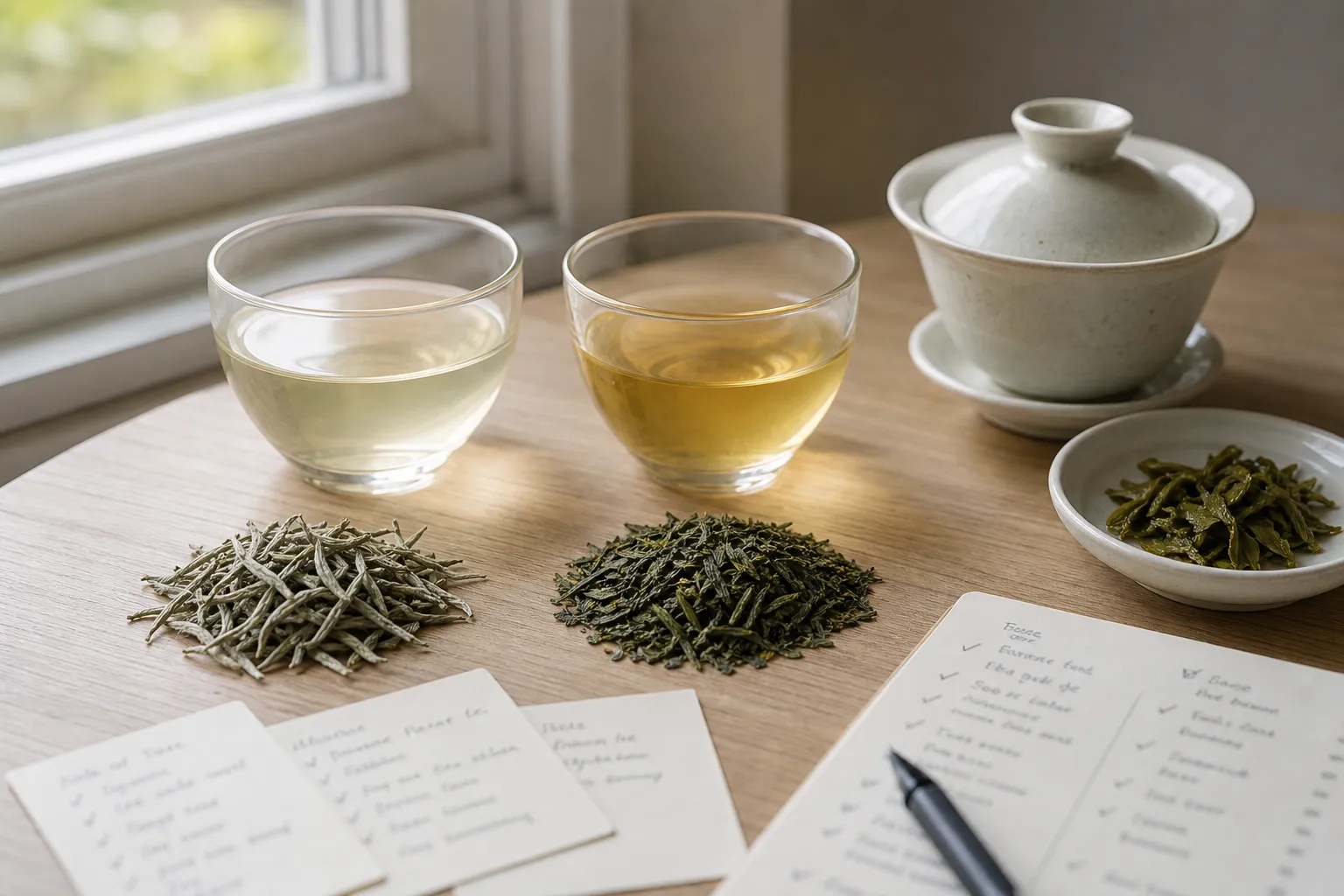
upward
Start with the broader guide
Use the broader guide first if you need the full scope before this page.
The Label Is a Map, Not the Whole Cup
Beginners often want the label to settle the comparison quickly. White tea sounds soft, pale, and gentle. Green tea sounds fresh, grassy, and bright. Those impressions can help with orientation, but they become misleading when treated as fixed rules.
A white tea can brew with body, sweetness, hay-like aroma, floral notes, or a slightly deeper liquor depending on leaf material, age, storage, and brewing. A green tea can be quiet, brisk, savory, vegetal, nutty, or mild depending on the tea and how it is prepared. Without a clear tasting note for the specific tea, the category should not be stretched into a promise.
A better beginner habit is to ask:
- What does the dry leaf look like: buds, leaves, broken pieces, twisted strands, flat leaves, or compressed material?
- Does the aroma seem fresh, sweet, grassy, floral, woody, toasted, stale, or muted?
- How does the first infusion behave: thin, sharp, soft, aromatic, bitter, sweet, drying, or rounded?
- Does the seller give concrete information, or mostly broad praise?
- Has storage likely affected aroma, color, or texture?
That keeps the comparison grounded and stops common white tea and green tea myths from becoming buying rules.
Leaf Color and Liquor Color Are Easy to Overread
Color is one of the first things a beginner notices, so it often gets too much authority. Pale dry leaves may suggest a lighter-looking tea, but they do not prove quality. A darker white tea is not automatically old, poor, strong, or more “active.” A green-looking tea is not automatically fresher or more refined.
Liquor color can mislead in the same way. A pale infusion does not always mean the tea is weak. It may reflect subtle leaf material, a short steep, cooler water, low leaf amount, or a large vessel. A deeper liquor does not automatically mean higher quality or fuller flavor. It may come from more leaf, longer contact time, smaller vessel volume, broken material, age, storage, or ordinary extraction differences.
The practical move is to compare color with aroma and mouthfeel. If a white tea brews pale but smells clear and leaves a lingering sweetness, the pale color should not be dismissed. If a green tea looks bright but tastes flat or harsh, the attractive color does not rescue the cup.
Try this small check:
- Smell the dry leaf and warm leaf before judging the liquor.
- Taste before deciding what the color means.
- Steep again and notice whether the tea opens, fades, sharpens, or becomes sweeter.
- Compare texture and aftertaste, not just the first visual impression.
The most visible cup is not always the most balanced one.
Processing Words Can Create False Certainty
Many misunderstandings about white tea vs green tea come from processing language. Beginners may see a few production words and assume they now know exactly how the tea should taste, brew, age, or affect the body. That is too much weight for a short label to carry.
Processing terms matter, but this page does not have enough source support to make detailed claims about exact oxidation, fixation, chemistry, or production steps. The narrower, more useful point is this: processing language can help you ask better questions, but it should not become a shortcut to certainty.
If a seller uses broad processing words without details, read them as category markers. If the description also includes harvest style, leaf grade, origin context, storage note, batch information, and brewing suggestions, you have more to work with. Even then, the cup remains the final check.
Beginners often make these mistakes:
- Assuming white tea must always taste the least processed.
- Assuming green tea must always taste grassy or sharp.
- Assuming one processing word explains every aroma in the cup.
- Assuming category language is enough to compare price or quality.
A better reading is more modest. Processing may shape the tea, but the drinker still has to observe the leaf and brew.
Flavor Expectations Often Cause the First Wrong Conclusion
A beginner may buy white tea expecting only softness, sweetness, and pale elegance. Another may buy green tea expecting immediate freshness and a lively green character. When the cup does not match that image, the tea gets judged too quickly.
Individual cups vary. A white tea can seem quiet in the first infusion and more aromatic later. It can also taste flat if too little leaf is used or if storage has dulled the aroma. A green tea can become sharp when brewed too intensely, but that does not mean all green tea is harsh. In many brewing sessions, leaf amount, water temperature, time, and vessel size change the result enough to confuse the comparison.
Instead of asking, “Which type is supposed to taste better?” ask: “What is this sample doing under these brewing conditions?”
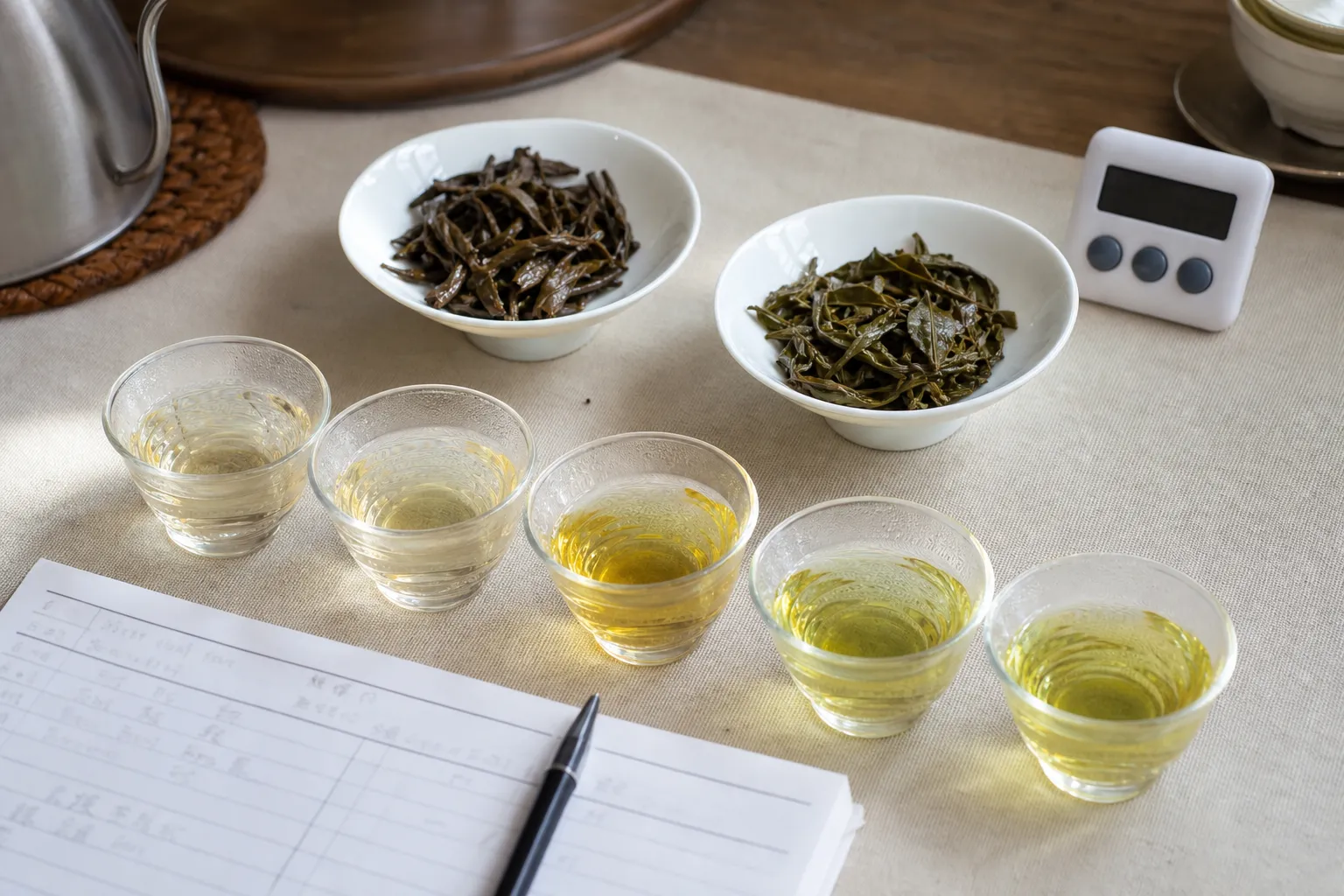
Compare dry leaf aroma
Do not assume stronger aroma always means better tea.
Compare first infusion texture
Do not assume pale liquor always means weak tea.
Compare second and third infusions
Do not assume the first cup tells the whole story.
Compare bitterness or dryness
Do not assume the category is the problem.
Compare lingering sweetness or aroma
Do not assume price alone explains the finish.
This kind of comparison is slower, but it teaches more. It keeps the category in view without letting it dominate the cup.
Brewing Outcomes Are Not Category Proofs
A bad first brew does not prove something broad about the tea type. A thin white tea does not prove white tea is flavorless. A bitter green tea does not prove green tea is naturally unpleasant. A dull cup does not prove the category is overrated.
Brewing choices can easily distort the comparison. Too much water, too little leaf, a long pause before drinking, an unsuitable vessel, or a steeping time that does not match the leaf can all change the result. Since this page does not have a verified brewing source pack for exact temperature or timing rules, the guidance here should stay observational.
If the white tea tastes too thin, adjust one variable at a time: use a little more leaf, reduce vessel size, or extend the steep slightly. If the green tea tastes too sharp, reduce intensity before blaming the category: use less leaf, shorten contact time, or avoid pushing the tea too hard.
A useful beginner comparison is not “white tea versus green tea forever.” It is “this white tea under this method compared with this green tea under this method.” That narrower frame produces better notes and fewer assumptions.
Price and Premium Wording Need Extra Caution
Price can suggest something about sourcing, rarity, grade, storage, presentation, or market positioning, but it does not explain the cup by itself. A high price does not prove a white tea will taste more refined than a green tea. A low price does not prove a tea is poor.
Premium wording can be even more slippery. Words such as rare, ancient, authentic, hand-selected, early harvest, high mountain, old tree, collector, or aged may be meaningful in some cases, but not on their own. Look for details that can be checked against the tea in front of you: leaf appearance, intactness, aroma clarity, storage condition, harvest or batch notes, and brewing behavior.
This matters with both white tea label assumptions and green tea label assumptions. White tea is sometimes made to sound automatically gentler, purer, older, or more precious. Green tea may be framed as automatically fresher, cleaner, more vivid, or more everyday. Both readings are too broad.
Before trusting the label, ask:
- Does the description name the tea clearly?
- Does it give practical brewing guidance without exaggeration?
- Does it explain storage or age claims when relevant?
- Do the leaves and aroma support the general description?
- Does the price make sense alongside the amount of detail provided?
If the answer is mostly “no,” slow down before treating the category name as proof.
Wellness Assumptions Should Stay Secondary
Tea is often described in wellness language, and beginners may compare white tea and green tea through that lens before learning how the teas actually brew. The available material for this page does not support specific claims about caffeine, antioxidants, metabolism, relaxation, or measurable health outcomes. Those topics need stronger public evidence than is available here.
For this comparison, do not choose between white tea and green tea based on broad wellness promises. If that language appears in a product description, treat it as marketing context unless it is supported by reliable, specific evidence. For everyday tea learning, it is more useful to ask whether you enjoy the aroma, whether the tea suits your brewing habits, and whether the seller gives enough context for the description being made.
Health-adjacent questions may matter to some drinkers, but they should not be answered with category slogans. A beginner comparing two teas is better served by cup-level observation than by assuming one tea type is automatically superior for the body.
A Calmer Way to Compare White Tea and Green Tea
The best beginner comparison is small, repeatable, and skeptical of shortcuts. Use the label, but do not obey it blindly. Look at the dry leaf. Smell it before brewing. Brew with attention. Taste the first infusion, then the next. Note whether the tea becomes sweeter, sharper, thinner, rounder, more aromatic, or more muted. Check whether the seller’s wording matches what the cup suggests.
If you are comparing samples, keep the setup as similar as possible: leaf amount, vessel size, water, and steeping style. You do not need laboratory precision. You just need enough consistency to avoid blaming the tea category for a brewing difference.
Most white tea vs green tea misconceptions come from turning one clue into the whole answer. The label is one clue. Color is one clue. Processing language is one clue. Price is one clue. Seller wording is one clue. None of them should override the leaf, the aroma, the infusion, and the way the tea changes over several steeps.
For a beginner, that is the useful conclusion: compare less dramatically, observe more closely, and let each cup earn its description.