
Western brewing baseline
White Tea Ratio for Western Brewing: How Much Loose Leaf to Use
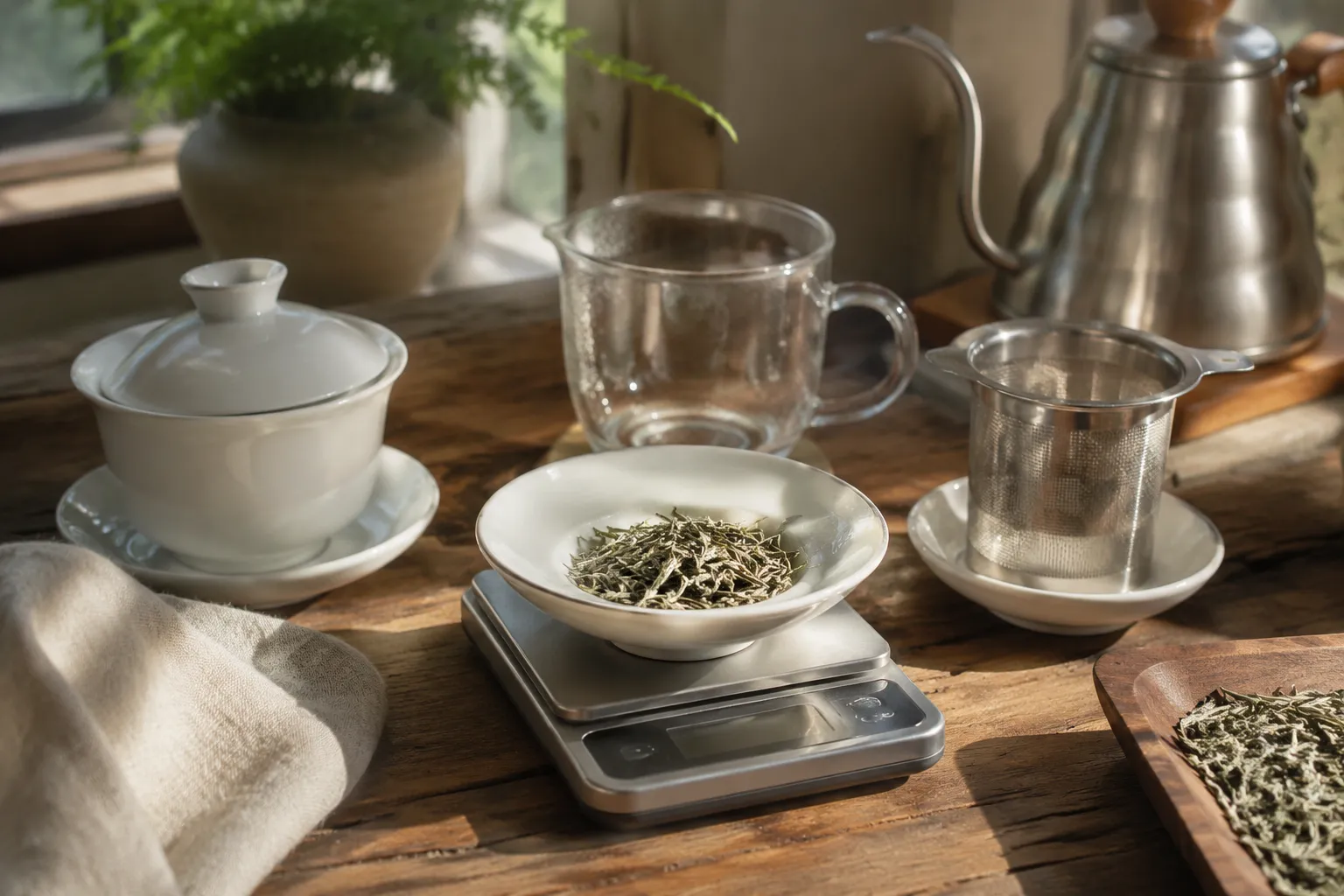
For Western mug or teapot brewing, start with 2.5 to 3 grams of loose leaf white tea per 8 oz / 240 ml of water. Use 2 grams per 8 oz for a lighter cup, or move toward 3.5 to 4 grams per 8 oz when the tea tastes thin, the leaves are very airy, or the mug holds more water than you assumed.
That loose leaf white tea ratio is a working baseline, not a standard that every Silver Needle, White Peony, Gongmei, or Shoumei must obey. White tea changes with leaf shape, water volume, steep time, temperature, and age. Grams give you the cleanest starting point; teaspoons are only a fallback.
If you do not have a scale, use about 1 generous teaspoon per 8 oz for smaller or broken leaf, and closer to 1 heaping teaspoon to a loose tablespoon-like scoop for long buds or broad leaf-and-bud material. The cup will be easier to repeat once you weigh the leaf.
upward
Read the full overview first
Use the broader guide first if you need the full scope before this page.
The Simple Western White Tea Ratio
Western brewing means a ready-to-drink cup made in a mug, basket infuser, or teapot, with more water and a longer steep than gongfu brewing. For that style, use this as the starting map:
Calculate white tea grams per cup from the water you actually pour, not from the word “cup.” Many mugs hold 10, 12, or 14 oz once filled. If “one teaspoon per cup” keeps giving you pale, watery liquor, the problem may be the mug size as much as the tea.
A steady first brew is simple: weigh 3 grams, use 8 oz of water, steep for about 3 minutes, then taste. If the aroma is there but the body is missing, add 0.5 to 1 gram next time before stretching the steep much longer. If the cup turns heavy, sharp, or flat, pour sooner or reduce the leaf slightly.
Why Teaspoons Mislead With White Tea
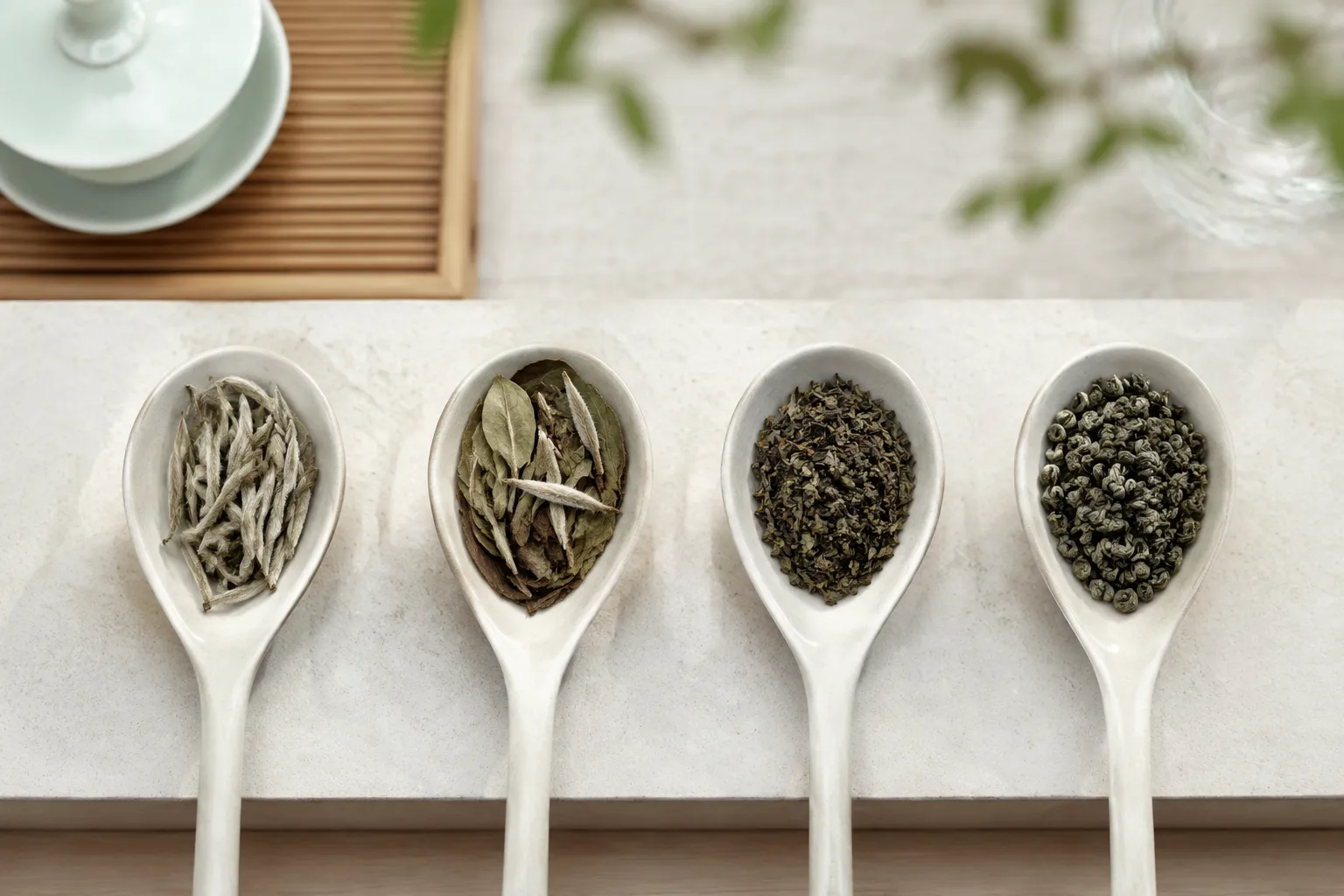
The old “one teaspoon per cup” habit breaks down quickly with white tea. A teaspoon can hold very different weights depending on whether it is filled with long buds, open leaves, mixed bud-and-leaf material, broken pieces, or denser shaped tea.
This is most obvious with fluffy white tea leaves. Silver Needle-style buds can fill a spoon while weighing less than expected because they are long, light, and full of air space. White Peony often takes up volume in another way, with broader leaves around the buds. Smaller broken leaf can pack more weight into the same spoon.
So treat a white tea teaspoon approximation as a temporary aid:
Long, airy buds
1 loose tablespoon-like scoop, or 2 heaping teaspoons for 8 oz.
Mixed bud and leaf
1.5 to 2 teaspoons for 8 oz.
Smaller broken leaf
1 generous teaspoon for 8 oz.
Denser rolled or blended tea
1 level to generous teaspoon, then adjust carefully.
These spoon measures are intentionally loose. Their job is to stop you from under-measuring a tea that looks bigger than it weighs.
What Changes the Answer
The white tea leaf to water ratio is only one control. Leaf style, steep time, water temperature, vessel size, and the condition of the tea all change how the cup lands.
Leaf style comes first. Silver Needle leaf volume can be high for a small weight, so a shy spoonful often makes a quiet cup. White Peony may give more body at the same gram weight because the broader leaves extract differently. Gongmei and Shoumei vary widely by picking standard, leaf size, age, and compression, so adjust from the cup rather than from the name alone.
Steep time is the next lever. A cup made with 3 grams per 8 oz may taste faint at 90 seconds and rounded at 3 minutes. Longer time can add body, but it can also draw out rougher edges, especially with broken leaf or hotter water. For a first Western white tea brewing ratio, keep the leaf weight steady and move time in small steps.
Water temperature matters too. Food science research on tea infusion supports the broad point that brewing time and temperature can affect sensory properties and infusion composition, but it does not set one household gram ratio for white tea. In practical terms, hotter water often extracts faster, while cooler water may make a low-dose cup seem softer or too faint. Many white teas sit comfortably below a rolling boil, but the next move should come from the cup in front of you.
Vessel size is the quiet mistake. A basket infuser in a 14 oz mug needs more leaf than a small 8 oz cup. If you scale the water up, scale the leaf with it.
Fixing a Thin, Strong, or Flat Cup
A thin tasting white tea is not always weak leaf. It can come from too little tea, an oversized mug, short steeping, water that is too cool for that leaf, stale aroma, poor water, or expectations shaped by tea bags. Before changing everything, check the simplest point: did you use enough grams for the water?
For the next cup, make one clear adjustment:
A strong white tea ratio is not automatically better. More leaf can bring fragrance and body, but it also gives you less room for long steeping or very hot water. If you move to 4 grams per 8 oz, taste earlier. A cup that feels full at 2 minutes may become dull or gripping if left too long.
The reverse is also true. If 2 grams per 8 oz tastes too faint, the tea is not necessarily poor. With long buds and open leaves, increasing the actual weight often solves more than adding another vague spoonful.
Why Online Ratios Look Different
White tea ratios online often conflict because they are answering different brewing situations. A Western mug, a teapot, a small repeated-infusion vessel, iced tea, and a formal tasting setup do not need the same amount of leaf.
Gongfu brewing uses a much higher leaf-to-water ratio with short repeated infusions. Its numbers can look extreme beside a Western white tea ratio, but they belong to a different method. Do not copy them into a large mug unless you want a concentrated session.
Formal tasting methods can also confuse the issue. They may use measured ratios to compare teas under controlled conditions, not to make the most comfortable everyday cup. Online calculators are useful for arithmetic, but they cannot see whether your tea is long-budded, broken, stale, tightly packed, or sitting in a large mug.
For this page’s purpose, the practical answer stays narrow: use grams, match them to real water volume, then adjust from aroma, liquor color, body, and finish.
A Repeatable Next-Cup Method
Use this once, then write down the result:
- 1. Weigh 3 grams of loose leaf white tea.
- 2. Use 8 oz / 240 ml of water.
- 3. Steep for about 3 minutes.
- 4. Taste before adding sweetener, milk, or more water.
- 5. Adjust only one variable for the next brew.
If the cup is too light, use 3.5 grams next time or steep a little longer. If it is too heavy, return to 2.5 grams or pour sooner. If the aroma is good but the texture is missing, increase leaf before pushing time hard. If the cup tastes rough, shorten time before assuming the ratio is wrong.
This keeps the white tea brewing ratio useful. You are not trying to force one number onto every Silver Needle, White Peony, Gongmei, or Shoumei; you are building a small baseline for the leaves in front of you.
FAQ
Is 2 grams per 8 oz enough for white tea?
It can be enough for a light cup, especially with smaller leaf or a tea that extracts easily. For many fuller Western brews, 2.5 to 3 grams per 8 oz is a better starting point, with 3.5 to 4 grams used when the cup tastes thin.
How many teaspoons of white tea should I use per cup?
Use teaspoons only as an approximation. For 8 oz, try 1 generous teaspoon for smaller leaf, 1.5 to 2 teaspoons for mixed leaf, or a loose tablespoon-like scoop for very fluffy buds. A small gram scale gives a more repeatable answer.
Should I change ratio or steep time first?
If the cup is watery, check leaf weight and mug size first. If the cup has enough body but tastes sharp, adjust steep time or water temperature before adding more leaf. Ratio, time, and temperature work together, so change one thing at a time.
Sources
Sources and further reading
Reference links are limited to sources considered suitable for public citation in this page.