
Gongfu decision
Should You Rinse White Tea Before Gongfu Brewing
If the dry leaf looks loose, fragrant, and free of obvious debris in the gaiwan, you usually do not need to rinse white tea before gongfu brewing. The decision is optional, not a rule. With loose Silver Needle or fresh White Peony, the first infusion can carry pale sweetness, soft floral aroma, and the quiet opening notes that disappear once the leaves are fully awake.
A very short rinse makes more sense when the tea is compressed, aged, dusty, tightly packed, or carrying a storage aroma you do not want in the first drinking cup. Even then, treat the rinse as a brewing adjustment: water in, water out, then smell the warmed leaf before choosing the next steep.
upward
Read the full overview first
Use the broader guide first if you need the full scope before this page.
The quick decision
- Keep the first infusion when loose young tea smells clean and aromatic.
- Use a flash rinse when compression, dust, tight packing, or storage aroma gets in the way.
- Judge the wet leaf after the rinse before setting the next steep.
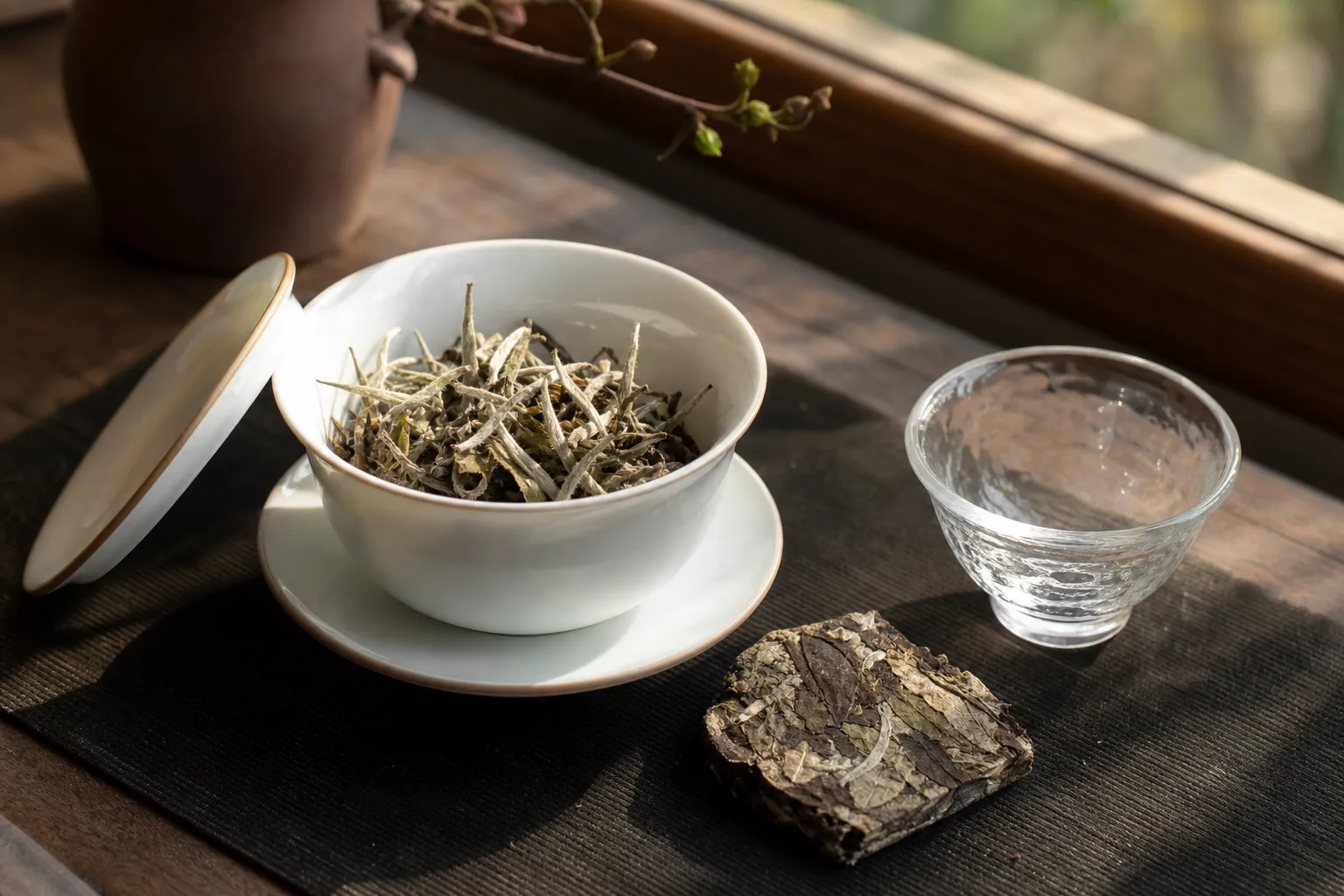
The Simple Rule: Keep Loose Aromatic Tea, Wake Tight Tea
Start with leaf form. Loose white tea opens quickly because water reaches the buds and leaves from several sides. If the dry material smells clean and inviting, a loose white tea rinse is often unnecessary. The first pour may taste light, but it can still show hay, melon skin, wildflower, almond, or soft herb notes worth keeping.
Compressed tea behaves differently. A cake, brick, or tight nest slows water entry, especially when the piece breaks into a dense chunk. Rinsing compressed white tea can help the outer layers soften before the first full infusion. This is not about making the session more correct; it is about helping the leaves separate so the next steep extracts more evenly.
Young loose tea
Young tea asks for restraint. A young white tea rinse can flatten a session when the material is already open, spring-like, and aromatic. Fresh Silver Needle or White Peony may look pale in the cup, yet still carry fine texture and bud fragrance that later steeps do not repeat in the same way.
Aged tea
Aged tea is more conditional. An aged white tea rinse may be useful when the cake is tight, the dry leaf smells closed, or the first wet aroma leans heavily toward storage. But age alone is not a command. Loose aged Gongmei or Shoumei can still give a drinkable first infusion if the leaf smells pleasant to you and opens easily in hot water.
When a Rinse Helps Before Gongfu Brewing
A gongfu tea rinse is most useful when it solves a specific problem in the vessel. If there is no problem, the step may only remove flavor.
Compression slows the first infusion
Use a short rinse when the tea is compressed and slow to open. Pour hot water over the piece, cover briefly, and decant almost immediately. The goal is not to brew a full cup; it is to warm the leaf, soften the edges, and let the layers begin to loosen. After that, smell the wet leaf. If the aroma seems clearer or more open, the rinse has done its job.
Dust and fragments affect texture
Consider a rinse before gongfu brewing when you see visible dust, many broken fragments, or powdery material at the bottom of the packet. That does not prove anything by itself. It is a handling and sensory cue. A quick rinse can reduce loose particles that cloud the first cup or make the texture feel scratchy.
Storage aroma changes the first read
Storage aroma is another reason to pause. Some aged cakes carry notes from their storage condition: dry wood, old paper, cellar-like warmth, herbs, or a closed stale edge. One sniff does not prove quality, age, or authenticity. Still, if the warmed leaf smells heavy rather than inviting, a flash rinse may make the next infusion easier to read.
The gaiwan also changes the cost of rinsing. In a small vessel with a high leaf ratio, even a few seconds extracts aroma, soluble flavor, and heat. If the bowl is filled with loose buds and leaves, a rinse may take away the softest part of the session. If it holds a tight tea cake chunk, the same rinse may simply prepare the leaf.
When Skipping the Rinse Is Better
Skip the white tea rinse when the first infusion is likely to be the most expressive cup. This is common with loose Silver Needle, fine White Peony, and lightly handled young material. These teas often speak through fragrance before strength: pale liquor, soft mouthfeel, and an aroma that can fade if the first pour is discarded.
Do not rinse only because someone says all gongfu brewing requires it. Gongfu practice uses short, intentional pours, but a rinse is still shaped by tea type, compression, age, and the drinker’s aim. White tea is not a tightly rolled oolong or a heavily compressed dark tea. Its first infusion may look thin and still be worth tasting.
Skipping the rinse also helps when you are learning a new sample. The white tea first infusion shows how quickly the leaves wake, whether the aroma is high or muted, and whether the next steep needs more time. If you always rinse automatically, you lose that early information.
The practical exception
If the first pour smells unpleasant to you, you do not have to drink it for the sake of tradition. Ask what the first liquid contributes. If it smells clean and inviting, keep it. If it mainly carries dust, compression, or storage heaviness, let it go and adjust the next infusion.
How to Rinse Without Losing the Session
If you choose an optional white tea rinse, keep it short. Think of it as a flash rinse, not a steep: add water, cover, and pour out promptly. With compressed white tea, let the water touch all sides of the piece, but avoid turning the rinse into a full extraction unless the cake is especially stubborn.
Water temperature changes the effect. Hotter water opens compressed leaves faster and pulls more from broken particles. Cooler water is gentler, but may not loosen a tight tea cake as well. Because white tea styles vary, use the rinse as a small lever rather than a universal formula.
- After the rinse, smell the wet leaf before adding water again. This is the best checkpoint. If the aroma becomes clearer, sweeter, or more open, shorten the next steep because the leaf is already awake. If the chunk still feels firm and closed, give the first drinking infusion a little more time instead of stacking multiple rinses.
- For a tight tea cake, break the piece as evenly as you can before brewing. Large dense chunks often release slowly on the outside while staying dry inside. A rinse helps, but it cannot fully fix poor breaking. Aim for a mix of intact leaf sections and smaller pieces rather than dust, then rinse briefly and begin the drinking steeps.
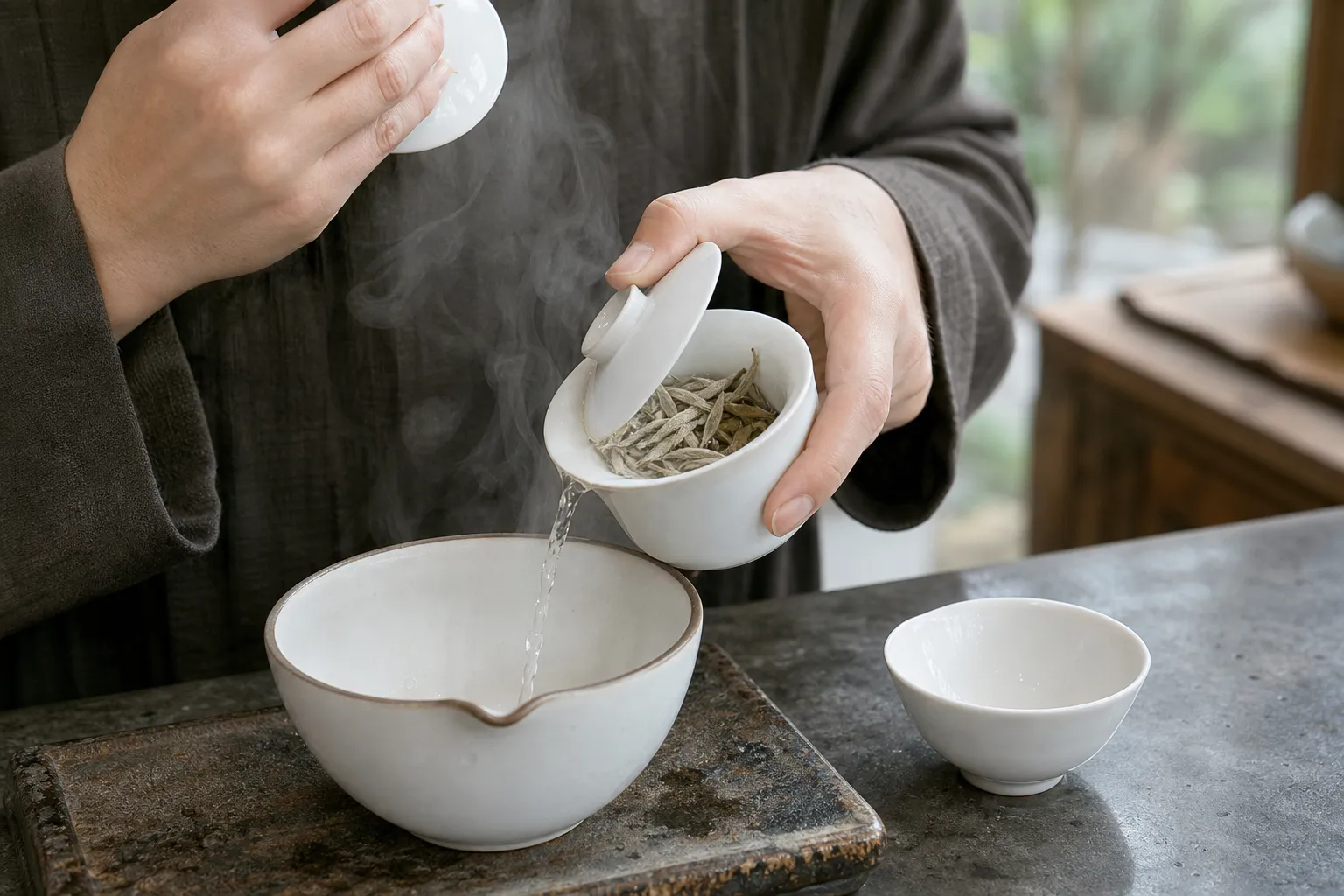
Common Confusion Around Rinsing White Tea
A rinse is not a cleanliness guarantee
If dust is visible, a rinse may be a reasonable sensory choice, but it should not be presented as making the tea better, safer, or more legitimate. For handling concerns, check what you can observe: appearance, aroma, packaging condition, seller information, and how the tea behaves in the cup.
A rinse does not always waste the best liquid
Sometimes it does. With loose young material, the first cup can be quiet but beautiful. With compressed Gongmei or Shoumei, the first flash pour may taste mostly like closed leaf, storage edge, or scattered fragments. In that case, discarding it may make the next cup clearer.
Aged tea is not automatically rinsed
Age changes the decision, but it does not settle it. A clean-smelling loose aged tea may not need a rinse. A dense cake with a strong storage note may benefit from one. The better question is simple: does the first contact with water reveal aroma you want to drink, or does it mainly prepare the leaf?
Market language should not override the gaiwan
Some labels frame rinsing as proof of skill, while others suggest every drop of a fine tea should be saved. Neither claim should override the gaiwan. Look at the leaf, smell the warmed material, notice dust or compression, and decide from the first pour.
A Practical Way to Compare Both Choices
If you are unsure, compare both approaches with the same tea. Use the same gaiwan size, similar leaf amount, and similar water temperature. In one round, drink the first infusion. In another, use a fast rinse and begin drinking from the next pour. Do not turn the result into a rule for every white tea; use it to understand this particular leaf.
Notice four things
- Did the no-rinse first cup have aroma worth keeping?
- Did the rinsed session open more evenly?
- Did visible dust or broken leaf change the texture?
- Did the storage note become clearer, softer, or still distracting after the rinse?
For loose young material, the no-rinse version may feel more complete because the first infusion carries the opening fragrance. For compressed or aged pieces, the rinsed version may taste more settled from the first drinking cup. These are practical patterns, not formal standards.
The cleanest answer is this: rinse white tea before gongfu brewing only when the leaf gives you a reason. Loose, aromatic, young tea often deserves its first infusion. Compressed, dusty, tightly packed, or storage-heavy tea may benefit from a fast rinse. Start with the leaf in front of you, then adjust the next cup by time, water temperature, and how open the wet leaves look.