
Brewing method
Western-Style White Tea Brewing
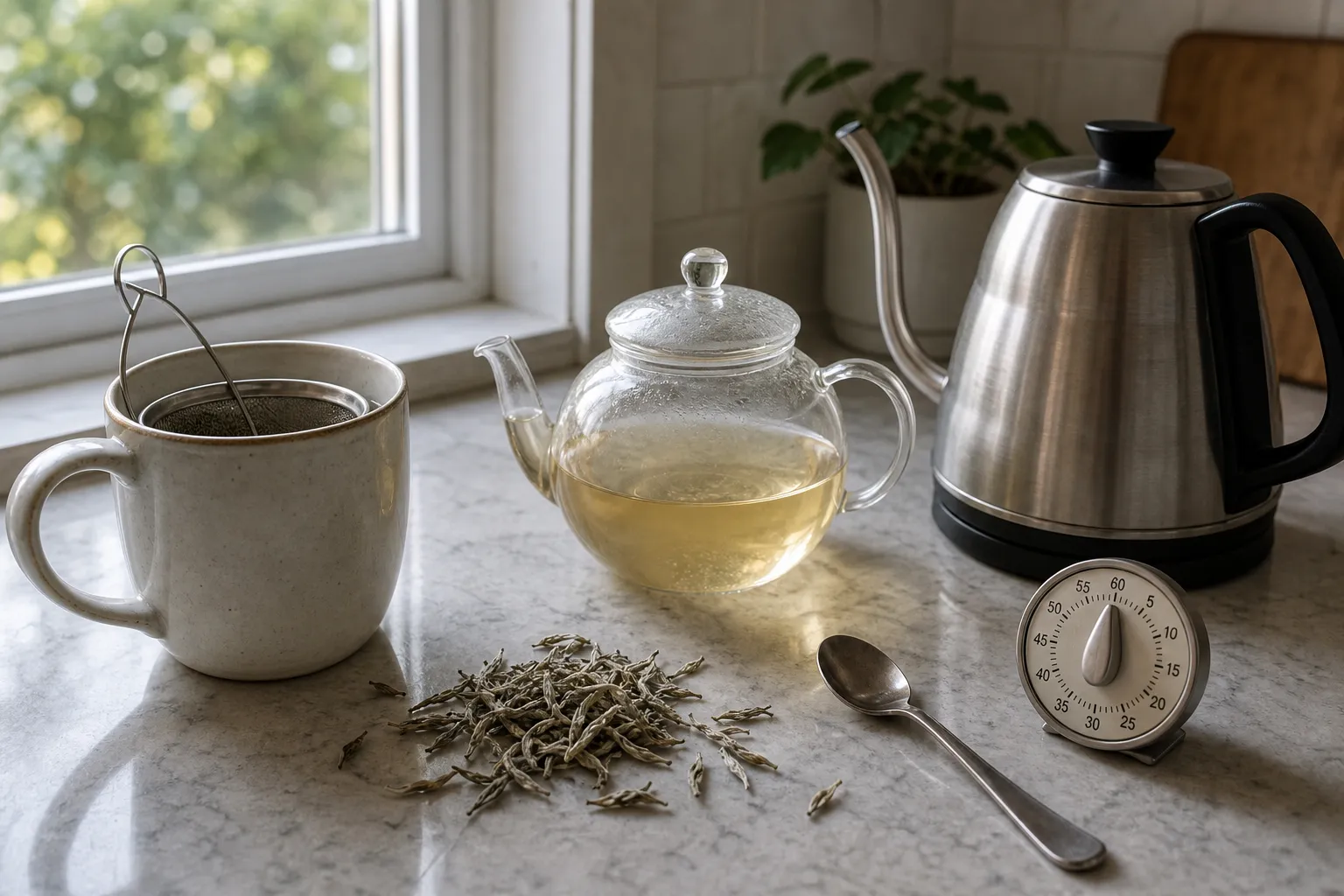
A mug infuser, a small teapot, and a pale handful of buds and leaves can give very different cups. That is the real problem behind western brewing white tea: most readers are not looking for ceremony. They want a cup that has aroma, body, and a repeatable path for adjustment.
Western-style white tea brewing usually means more water and a longer infusion than a gaiwan session, with the tea served by the mug or teapot rather than through many small pours. The useful answer is not one fixed recipe. Start with a modest loose leaf ratio, use water warm enough to draw flavor without flattening the cup, steep long enough to build texture, then change one variable at a time.
Because this page has no visible external source base for fixed brewing numbers, the ranges below are practical starting points rather than universal standards. Judge the next cup by aroma, liquor color, texture, finish, and how the leaves behave in your vessel.
upward
Read the full overview first
Use the broader guide first if you need the full scope before this page.
What Western-Style Brewing Means for White Tea
Western-style brewing is the everyday mug or teapot method: a larger volume of water, a basket infuser or pot strainer, and an infusion that usually lasts a few minutes. Gongfu-style brewing works differently, with more leaf, less water, and many short steeps in a gaiwan or small pot.
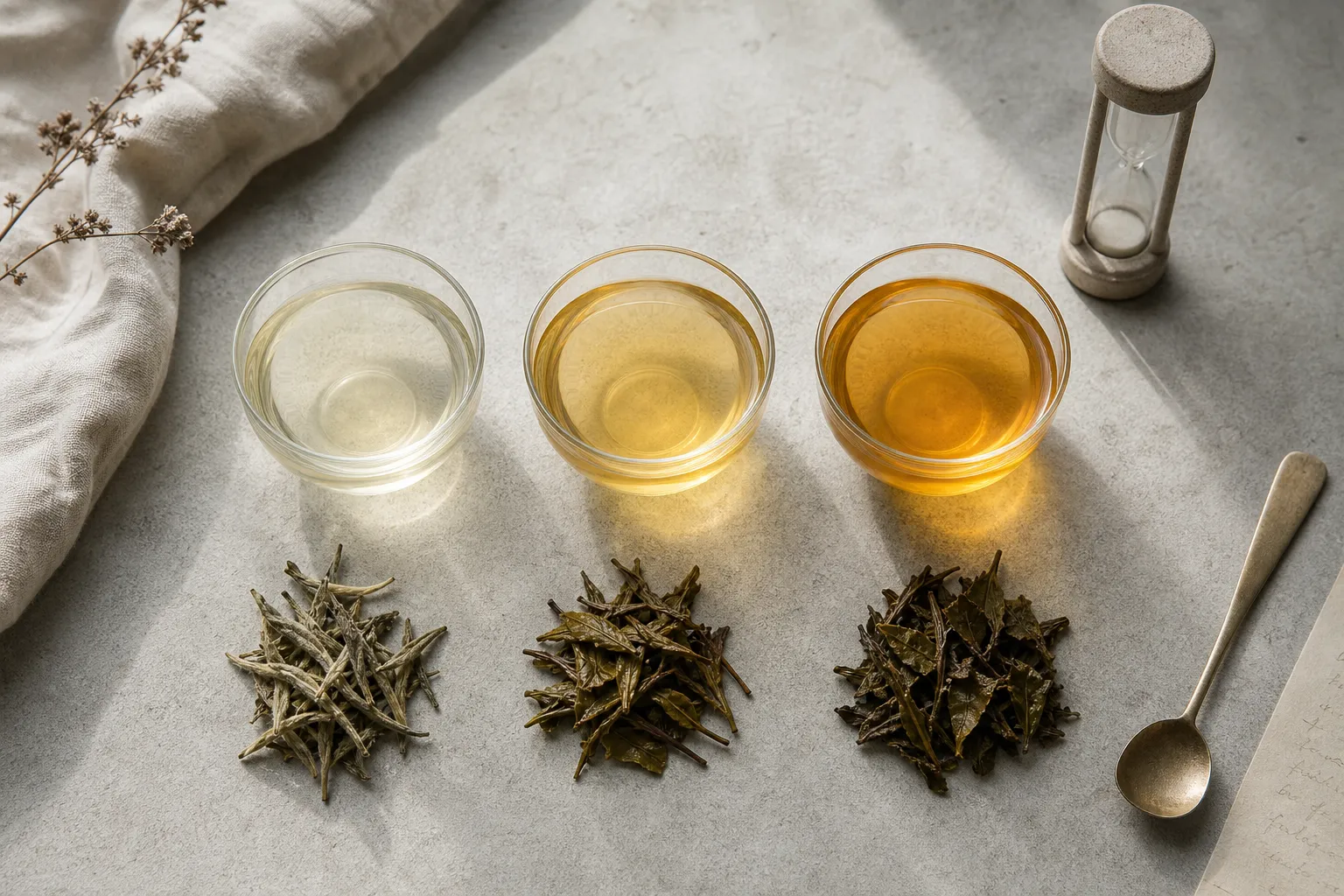
That distinction matters for white tea because the leaf shape can mislead the eye. Silver Needle buds are long and airy, so a full-looking spoon may weigh very little. White Peony spreads into a leaf-and-bud pile that opens more quickly. Gongmei and Shoumei may include broader leaves, stems, or compressed pieces, so the same spoonful can extract with more weight.
Western-style brewing is useful when you want a calm desk cup, a small pot for two people, or a morning method you can repeat. It is less useful when you want to trace every change across many quick infusions. The Western question is simpler: how much leaf, how hot, how long, and what should change if the cup tastes thin, dull, or too heavy?
White Tea Ratio for Western Brewing
A practical starting loose leaf white tea ratio is about 2–3 grams of leaf for 240 ml / 8 oz of water. Without a scale, that may look like a generous teaspoon for denser broken leaf, or several loose teaspoons for fluffy buds and larger leaves. Volume is not weight.
For a larger teapot, scale the leaf with the water rather than with the number of drinkers. A 500 ml pot may start around 4–6 grams. A 750 ml pot may start around 6–9 grams. Use these as cup-building ranges, not fixed rules. If the first infusion tastes watery, add leaf next time before stretching the steep far beyond balance.
Silver Needle
Use enough buds to avoid a hollow cup; fluffy volume can mislead. Watch for pale liquor, soft aroma, and gentle body.
White Peony
Start moderate; leaf-and-bud sets often open readily. Watch for floral aroma, fuller texture, and light sweetness.
Gongmei
Start moderate and adjust for leaf size and age. Watch for rounder body, dried-fruit or herbal edges.
Shoumei
Use care with broken or compact leaf. Watch for broader body, darker liquor, and stronger finish.
Compressed white tea
Weigh if possible; pieces vary in density. Watch for slow opening at first, then stronger later infusions.
For a clear first trial, keep the cup size steady. Thinness is often a leaf-to-water issue. Drying roughness more often points toward heat, time, broken leaf, or overconcentration.
Measuring Loose White Tea Without a Scale
A small scale helps, but many people brew white tea in a mug without one. The better non-scale habit is to measure by leaf shape and write down what you used. “Two teaspoons” means little if one tea is downy Silver Needle and another is a compact cake flake.
For Silver Needle, a tablespoon-sized pinch may still weigh less than expected. For White Peony, a loose tablespoon can include both flat leaves and lighter buds. For Gongmei or Shoumei, especially smaller or broken material, the same spoon may carry more weight and extract faster.
A simple note-taking method
- Fill your mug with water first and learn its actual volume.
- Add a modest portion of dry leaf to the infuser.
- Note whether the leaf is fluffy, broad, broken, or compressed.
- Brew once at a steady temperature and time.
- Adjust the next session by leaf amount before changing everything else.
This is slower than copying a number, but it teaches your vessel. A tall 350 ml mug, a 240 ml cup, and a 600 ml teapot do not ask for the same portion.
How to Brew White Tea in a Mug Infuser
Mug brewing white tea works best with a roomy basket, not a tiny ball that traps expanding leaves. White tea often needs space to hydrate. If the infuser is cramped, the cup can taste uneven: pale at first, then grassy or flat after a long wait.
A simple mug method
- Use 2–3 grams of loose leaf for about 240 ml / 8 oz water, then adjust.
- Start with water around 75–85°C / 167–185°F.
- Pour water over the leaves and cover the mug if you want stronger heat retention.
- Steep for about 2–4 minutes, tasting near the shorter end first.
- Remove the infuser fully instead of letting the leaves sit in the cup.
Covering the mug can hold warmth and lift aroma, especially in a cool room. It can also push extraction harder if the mug is thick and the water starts hot. If the cup becomes heavy or blunt, repeat the same leaf amount uncovered, or use slightly cooler water.
Free-floating leaves often open well, but they are harder to remove cleanly. A wide basket gives most of the same expansion while letting you stop the infusion. For Western brewing, that control usually matters more than the look of leaves drifting in the mug.
How to Brew White Tea in a Teapot
White tea teapot brewing changes heat, contact time, and consistency. A ceramic or glass pot may cool at a different pace than a thick mug, and a full pot can keep leaves in contact with water longer if people pour slowly.
Start by knowing the real pot volume. Some small teapots hold less than they appear to; many family pots hold more. For a 500 ml pot, begin around 4–6 grams. For a 750 ml pot, begin around 6–9 grams. Use the lower side for dense, broken, or compressed leaf; use the higher side for very fluffy buds or broad intact leaves.
A practical teapot sequence
- Warm the pot briefly if the room is cold, then discard that water.
- Add the measured or estimated leaf.
- Pour moderate-hot water over the leaf.
- Steep for about 3 minutes before judging.
- Decant fully into cups or a serving pitcher if the pot has no removable basket.
The last step shapes the whole table brew. If leaves remain in the pot while people drink slowly, the final cup may be much stronger than the first. A removable basket helps, but a full decant gives cleaner control. For several cups, consistency comes from separating leaf and liquor at the chosen time.
Mug vs Teapot: What Changes in the Cup
A mug is direct: one drinker, one infuser, one removal point. It is easier to make small changes, such as a little more leaf tomorrow, slightly cooler water, or thirty seconds more time.
A teapot is more social and can feel rounder because the leaves sit in a larger body of water. It is also less forgiving if the tea continues steeping while cups are poured. Neither vessel is better for every white tea.
Silver Needle may benefit from careful heat and a little patience. White Peony often gives more aroma and body without much pushing. Gongmei and Shoumei can become generous in a pot, while compressed or broken pieces may need restraint.
Choose the vessel by the problem you are solving. For one cup and easy adjustment, use a mug infuser. For shared cups and a rounder table brew, use a teapot and pour the liquor off the leaves.
Water Temperature and Steep Time
White tea water temperature is often discussed as if all white teas need the same treatment. In practice, the starting point should reflect leaf shape, age, density, and the cup you want.
Cooler water can keep a softer profile, but it may also produce a thin brew. Hotter water can build body, especially with broader or older leaves, but it can emphasize roughness in broken or tightly compressed material. For a first Western-style attempt, 75–85°C / 167–185°F is a reasonable starting range.
Steep time works the same way. Begin around 2–4 minutes for a mug or small pot. Taste near 2 minutes if the leaf is broken, dense, or unfamiliar. Give more time if the cup smells pleasant but feels too light. If the liquor becomes drying, heavy, or dull, shorten the steep before blaming the tea.
Thin, pale, short finish
Add more leaf next time. If still unbalanced, slightly lengthen the steep.
Fragrant but watery
Keep temperature and increase leaf. If still unbalanced, use a smaller mug.
Bitter or drying
Shorten the steep. If still unbalanced, lower water temperature.
Flat and muted
Use fresher water or slightly hotter water. If still unbalanced, check leaf age and storage smell.
Strong first cup, weak resteep
Use less water or more leaf. If still unbalanced, try two shorter steeps.
Change one variable at a time. If you add leaf, raise temperature, and extend time in the same session, you will not know which change helped.
Resteeping After a Western-Style Brew
You can often resteep white tea after a Western-style brew, though the second cup may not resemble the first. A long first infusion spends much of the leaf’s easy extraction. The next round may need hotter water, more time, or a smaller volume.
For mug brewing, remove the basket after the first infusion and set it aside. If the leaves still smell sweet, floral, hay-like, fruity, or otherwise pleasant, try another round. Use slightly hotter water or steep longer than the first cup. If the leaves smell spent or the first cup was already pushed hard, the second infusion may be faint.
Compressed white tea cake can behave differently. A chunk may open slowly, especially if the inner layers stay tight. A rinse is not necessary as a fixed rule for Western brewing, but a brief wetting can help dense pieces loosen before the main infusion. Another option is to use a slightly longer first steep and expect the second steep to gain strength as the piece opens.
With cake tea, weigh if you can. A small-looking piece may be denser than loose leaves. If the first cup turns dark quickly, reduce the amount next time or shorten the infusion.
Why Western-Brewed White Tea Tastes Thin
Thinness usually comes from a mismatch between leaf, water, and time. The common mistake is treating a fluffy scoop of white tea as if it carries the same weight as a compact scoop of smaller leaf. The mug looks full, but the liquor lacks body.
Other causes are possible. Water may be too cool for the leaf style. The vessel may be too large for the portion. The infuser may be too cramped. The steep may be too short for a Western cup. Older or poorly stored tea may taste muted, though storage and age language should be checked against appearance, aroma, infusion behavior, and seller context rather than accepted by label wording alone.
Fix thinness in this order
- Use a smaller water volume or more leaf.
- Give the leaves more room.
- Extend the steep by 30–60 seconds.
- Raise the water temperature slightly.
- Compare the dry leaf aroma with the brewed aroma.
Do not jump straight to a very long steep. That can make the cup stronger without making it more balanced. A fuller cup usually starts with the right ratio, then time and heat.
A Practical Brewing Path for the Next Cup
For one mug, start with 2–3 grams of leaf in a wide basket, moderate-hot water, and a 2–4 minute infusion. For a teapot, scale the leaf to the actual water volume and decant fully when the taste reaches the point you want. Keep Silver Needle, White Peony, Gongmei, Shoumei, and compressed white tea separate in your notes because leaf shape and density change the result.
If the cup is thin, adjust leaf amount before making the steep much longer. If it is drying, shorten time or reduce heat. If it is fragrant but light, use a smaller vessel or a little more leaf. If it is flat, check water temperature, leaf freshness, and storage smell before assuming the method failed.
Western-style white tea brewing becomes easier when you stop chasing one fixed recipe and start reading the cup. For the next session, keep the same vessel and water amount; change only the leaf amount or the steep time.