
White tea brewing note
Does the First Infusion of White Tea Have the Most Caffeine
Usually, yes. In many white tea sessions, the first drinkable infusion is the cup most likely to carry the strongest caffeine expectation, because dry leaves are meeting water before they have been partly extracted.
But white tea first infusion caffeine is not a fixed number. The first steep does not “wash out” all caffeine, and later infusions are not automatically caffeine-free. Leaf amount, water temperature, steep time, water volume, leaf form, and brewing style can all change how caffeine is spread across the session.
Treat the first cup as meaningful for caffeine, treat later cups as lighter but still relevant, and look at the whole session rather than one infusion number.
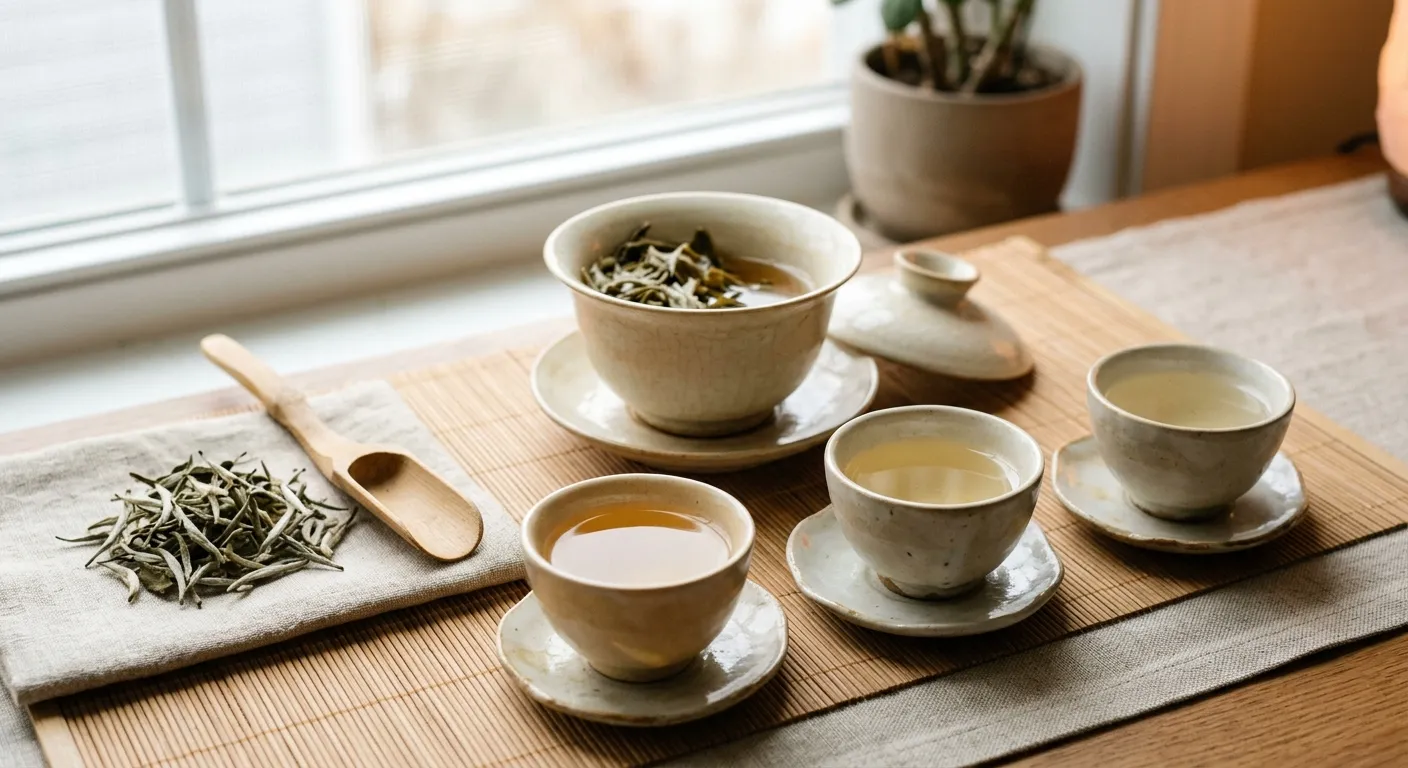
upward
Start with the broader guide
Use the broader guide first if you need the full scope before this page.
Why the first infusion often matters most
The first infusion has the clearest reason to be caffeine-rich: the leaves have not yet opened, rinsed, or given up much of their soluble material. When water first reaches the buds and leaves, it begins drawing out compounds that shape taste, aroma, color, body, bitterness, sweetness, and caffeine.
That does not mean the first infusion always contains the most under every brewing setup. It means that, in many practical sessions, the first drinkable steep deserves the most attention if caffeine is part of your decision.
The phrase “first steep white tea caffeine” can describe very different cups:
- A large mug brewed for several minutes.
- A small gaiwan with a high leaf-to-water ratio.
- A quick rinse that is discarded.
- Broken leaf material that extracts quickly.
- Whole buds, such as Silver Needle, that may release more slowly.
- A compressed white tea piece that has not fully loosened yet.
Those are not the same caffeine situation. Without a controlled test that fixes the tea, leaf weight, water volume, temperature, steep length, and infusion number, exact percentages would be guesswork.
Resteeped white tea is not caffeine-free
A common misunderstanding is that once white tea has been steeped once, the later cups are basically empty of caffeine. That is too simple.
Resteeped white tea may taste paler, softer, rounder, or thinner than the first cup, but flavor strength is not a reliable caffeine meter. A later infusion can lose some early aroma and sweetness while still drawing remaining soluble material from the leaves.
This matters when you drink several infusions from the same leaf. A second or third cup may feel gentler, but caffeine in resteeped white tea can still be part of the session. The better question is not only “first cup or later cup?” but:
How much leaf met how much water, for how long, at what temperature, and how many cups did I drink?
For example, a light first infusion followed by hotter, longer later steeps may not behave like a strong first cup followed by quick, faint resteeps. The earlier extraction matters, but so do the choices you make afterward.
A careful way to think about white tea multiple infusions caffeine:
- The first infusion often extracts a meaningful amount.
- Later infusions may extract less per cup as the leaves are spent.
- Later infusions should not be assumed to contain none.
- The total session can matter more than any single cup.
Brewing variables that change the answer
White tea is not one uniform leaf. A fluffy bud tea, a leafy White Peony, an aged Shoumei cake, and broken leaves from the bottom of a bag can behave differently in water.
Leaf amount
More dry leaf gives the water more material to extract from. A light pinch in a mug is not comparable to a full gaiwan.
If you use more leaf while keeping the same water volume, the session usually becomes more concentrated. That does not give an exact caffeine number, but it changes the expectation.
For someone trying to moderate caffeine, reducing the dry leaf amount is often more practical than relying on later infusions to be empty.
Water volume
Water volume changes concentration. The same leaves brewed in a large mug and a small gaiwan will not produce equivalent servings.
A small vessel with a high leaf-to-water ratio can make short infusions taste intense. A larger vessel may spread extraction into more liquid. This is one reason the statement “the first infusion has the most caffeine” can be broadly useful but still incomplete.
Steep time
Longer contact gives water more time to draw material from the leaves. A flash steep and a four-minute steep are not the same event.
This matters because many white tea drinkers change steep time across a session. The first infusion may be short, the second slightly longer, and later infusions longer still. If the first steep is very brief and a later steep is much longer, the caffeine pattern may be less obvious than a simple first-cup rule suggests.
That does not prove a later infusion contains more caffeine. It only shows why steep time belongs in the answer.
Water temperature
Hotter water tends to extract tea compounds more assertively. Cooler water may give a softer cup and a slower extraction pattern.
Many drinkers use moderate temperatures for tender bud-heavy white teas. Others use hotter water for aged, compressed, or leafier styles. If the first cup is brewed gently and later cups are pushed with hotter water, later infusions may have more body than expected.
Leaf grade and leaf form
White tea leaf grade caffeine is hard to rank cleanly without tea-specific testing, but leaf form affects extraction.
Whole buds may release slowly. Broken leaves often infuse faster because more surface area is exposed. A compressed white tea cake may need time to loosen, especially if the piece is still tight in the center.
Watch the leaves as much as the clock. Are they still compact? Have the buds and leaves opened? Is the cake chunk still dense? The cup-to-cup pattern follows the physical leaf, not just the infusion count.
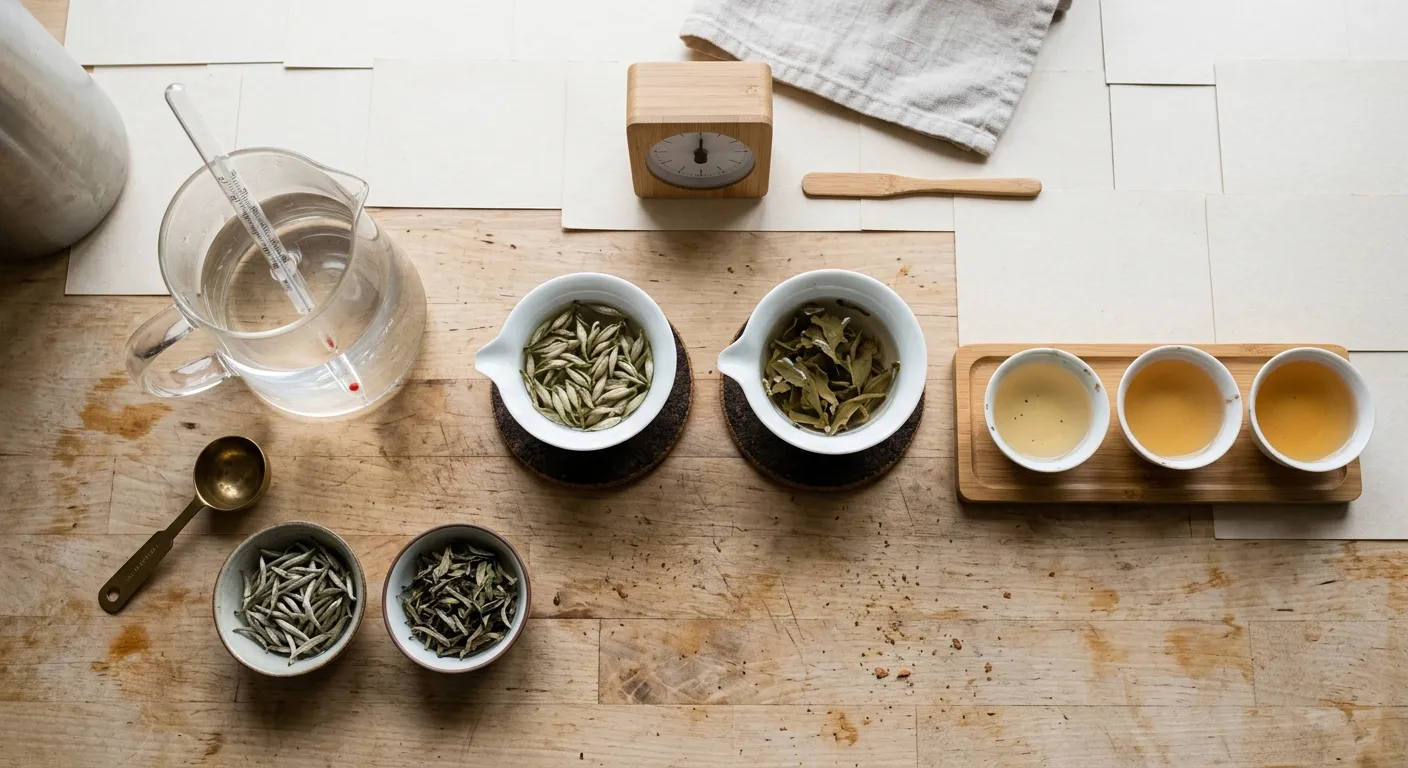
Gongfu brewing spreads the question across many cups
Gongfu white tea changes the caffeine question because it uses a different balance of leaf, water, and time.
The vessel is usually small, the leaf amount is often higher, and the steeps are short and repeated. One infusion may be only a few seconds, but the full session may include many pours. That makes gongfu brewing caffeine difficult to compare with one Western-style mug.
A first gongfu infusion may be small by volume, especially if it is brief. But the session can still add up because the same leaves are infused again and again. Later infusions white tea caffeine should not be dismissed just because each cup is small or pale.
The main difference is distribution. A mug brew may concentrate much of the session into one larger cup. Gongfu brewing spreads the experience across a sequence: early fragrance, fuller middle infusions, and fading later cups.
Language also matters. If the first water contact is a quick rinse and you discard it, then the “first infusion” from the drinker’s point of view may actually be the first cup kept for drinking. When asking whether the first infusion has the most caffeine, be clear whether you mean first water contact or first drinkable cup.
For gongfu sessions, think in terms of the whole table:
- Higher leaf amount can make the session more concentrated.
- Very short steeps do not make the tea caffeine-free.
- Many small infusions can still matter.
- Hotter or longer later steeps may continue extracting from the leaves.
If caffeine is part of your brewing decision
If the question is “Can I make later infusions caffeine-free by steeping once?” the practical answer is no. “Resteeped white tea caffeine free” is more of a simplification than a dependable brewing rule.
If you want a gentler white tea session, adjust the parts you can control:
- Use less dry leaf.
- Brew a smaller total session.
- Keep steep times shorter.
- Use moderate water temperature.
- Stop after fewer infusions.
- Drink earlier in the day if timing matters to you.
- Avoid treating a discarded first steep as a dependable caffeine-removal step.
People vary in caffeine sensitivity. If caffeine affects you strongly, serving size, timing, and personal medical guidance may matter more than broad tea rules.
For most white tea drinkers, the best habit is observation. Note the leaf amount, vessel size, water temperature, steep length, and number of cups. Those details explain more than the infusion number alone.
The careful answer
The first infusion of white tea often has the strongest claim to containing the most caffeine, because the leaves are fresh to the water and have not yet been partly extracted. But it is not the whole story.
Later infusions can still contain caffeine. Gongfu brewing can spread extraction across many small cups. A cool, short first steep followed by hotter, longer later steeps may behave differently from one strong mug infusion.
So do not read the first infusion as “all the caffeine” and the later infusions as “none.” Read the session as a sequence shaped by leaf amount, water volume, temperature, steep time, vessel size, leaf form, and how many cups you actually drink.
The most useful everyday rule: expect the first drinkable infusion to be meaningful, expect later infusions to still count, and avoid exact caffeine claims unless the tea and brewing method have been measured under controlled conditions.