
What Gaiwan Size Works for Gongfu White Tea
Practical starting size
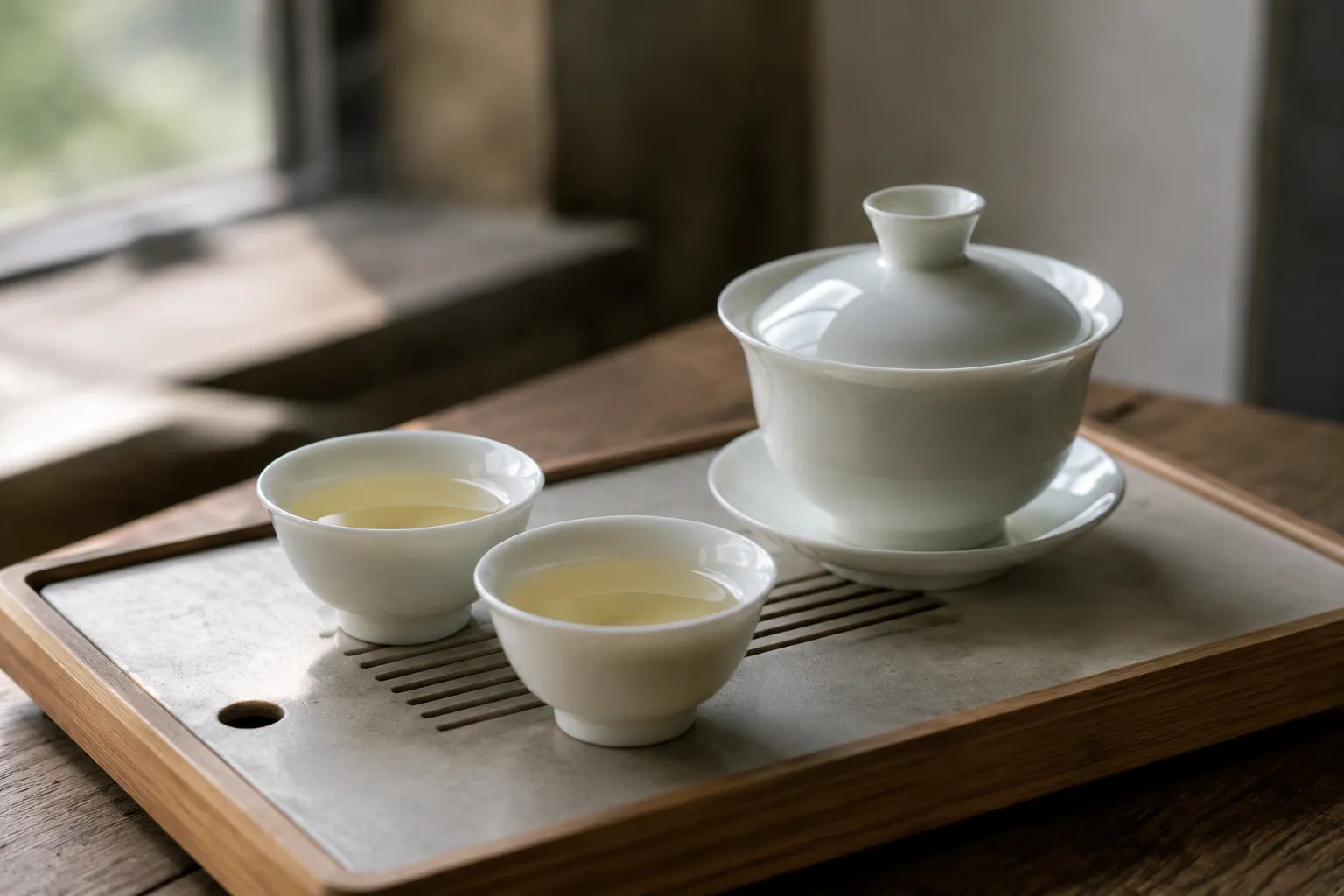
A practical gaiwan size for white tea is usually small to moderate: about 90-120 ml for one drinker, and about 120-150 ml when sharing with two or three small cups. This is not a formal standard. It is a brewing guideline shaped by leaf bulk, pour speed, cup strength, and how cleanly the lid lets liquor leave the bowl.
If you are buying one gaiwan for gongfu white tea, 100-120 ml is the most forgiving starting range. It keeps the liquor concentrated enough to read aroma and body, but it does not make so much tea that each infusion sits around cooling before you drink it.
upward
Read the full overview first
Use the broader guide first if you need the full scope before this page.
The Practical Starting Size
For solo gongfu sessions, a 90-110 ml gaiwan often feels easiest to manage. The smaller water volume supports quick infusions, reduces waste when tasting several rounds, and makes changes in leaf amount, water temperature, and pour speed easier to notice.
For two people, 120-150 ml is usually more comfortable. It gives enough liquor for small cups without forcing a very large leaf dose. Once a gaiwan moves much beyond that, the rhythm changes: you may need more leaf, more water, and sharper timing. A slow pour from a large, hot vessel can keep extracting while you are still emptying it.
Do not choose by the printed capacity alone. A 120 ml gaiwan with a wide opening, balanced lid, and thin rim can feel easier than a 100 ml one that traps leaves near the spout or feels awkward to hold. Capacity matters; handling decides whether the size is useful.
- Around 100 ml if you mostly drink alone.
- Around 120 ml if you want one vessel for solo and shared sessions.
- Around 150 ml only if you regularly brew for more than one person.
Why White Tea Changes the Size Question
White tea is not one tidy leaf shape. Silver Needle is mostly buds, often light and narrow before brewing. White Peony includes buds and leaves, so it can take up more space. Gongmei and Shoumei often include larger, more open material, and compressed tea may loosen unevenly over the first few infusions.
Dry leaf volume is the first check. A weighed portion of fluffy White Peony can look much larger in the gaiwan than the same weight of a compact tea. If the dry leaf already fills most of the bowl, early infusions may feel crowded: water moves less freely, the lid catches stems, and the pour slows.
Leaf expansion matters even more after the second or third infusion. Wet leaves can rise toward the lid, especially in a small gaiwan. That is not automatically wrong; gongfu brewing often uses a high leaf-to-water ratio. But if the lid no longer sits cleanly or the pour gap is blocked, the working capacity is too small for that leaf amount, that leaf style, or your current pouring comfort.
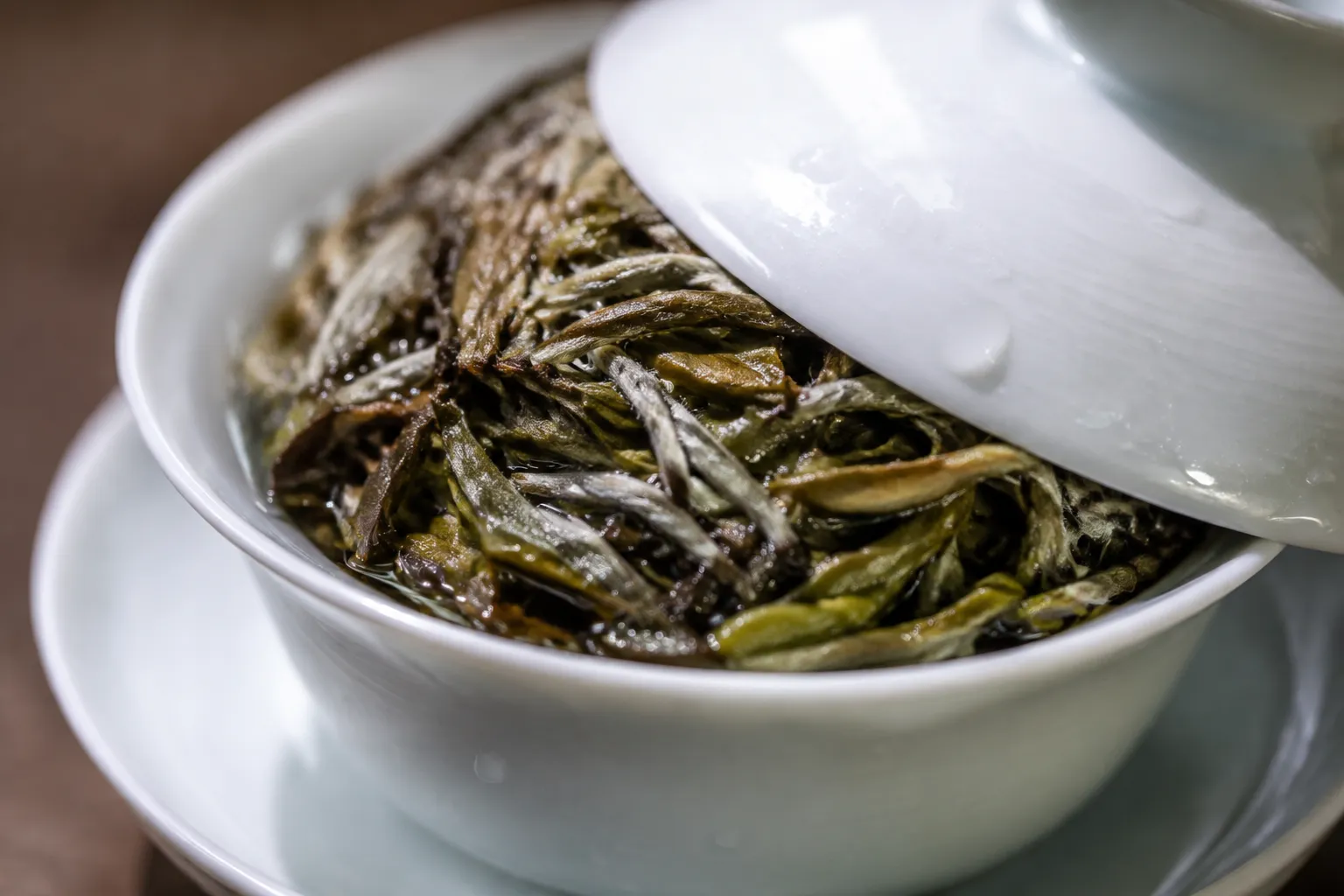
A slightly larger gaiwan can give bulky material more room. The tradeoff is dilution if you keep the same leaf amount and fill the bowl fully. Before buying another vessel, try pouring less water, adding a little more leaf, or shortening the infusion.
For a small gaiwan white tea session, watch the wet leaves rather than the advertised number. If expanded leaves make pouring hesitant, the practical capacity has been exceeded.
Size, Strength, and Aroma
Gongfu brewing depends on repeated short infusions. A smaller gaiwan can make infusion control for white tea easier because the water volume is limited and the pour is quick. Pale liquor, floral notes, hay-like sweetness, melon, dried herb, or a soft woody tone may be easier to follow when the brew is not stretched across too much water.
Smaller is not always better. If the leaves are packed tightly, extraction can become uneven. Some parts of the leaf mass sit in less moving water while other parts release quickly near the pour path. The cup may feel thin and rough at the same time: not enough round sweetness, but enough edge to distract from the aroma.
A larger gaiwan gives more water around the leaf, which can soften the cup and make the session feel relaxed. That can be useful when drinking with someone else. The limit is that white tea aroma can become harder to track if the same leaf dose is spread through too much water. The liquor may look pleasant but taste faint.
The vessel does not make the tea strong by itself. It changes the relationship between leaf, water, time, and pour speed. If the cup is weak in a 150 ml gaiwan, reduce the fill level before judging the tea. If the cup is heavy or drying in a 90 ml gaiwan, use less leaf or pour sooner before blaming the vessel.
The best check is repeatable: keep the tea the same, change only one variable, and taste the next steep. If aroma becomes clearer with less water, the earlier volume was probably too large for that leaf dose.
Pour Control Matters More Than the Label
A gaiwan that is technically the right size can still be wrong in the hand. Gongfu white tea asks for clean timing. When an infusion is meant to be short, a hesitant pour becomes part of the steep. The liquor keeps extracting while you adjust your grip, avoid heat, or work around a blocked lid.
Smaller gaiwans often help beginners because they are lighter and easier to tilt. They also reduce the amount of hot water moving at once. For many drinkers, that makes the session calmer and more precise. A smooth 100 ml gaiwan can be more useful than a larger one chosen only because it seems more generous.
The lid fit matters. Leaves and stems can slide toward the opening, so the gap between lid and bowl needs to release liquor without dumping material into the cup or fairness pitcher. If the gap is too narrow, the pour slows. If it is too wide, small pieces escape. Neither issue is solved by capacity alone.
Rim shape and heat handling also affect the real gongfu white tea vessel size you can use. A thick gaiwan may hold heat in a way that feels clumsy for quick repeated steeps. A very thin one may pour beautifully but feel hot if filled too high. The usable size is the one you can lift, tilt, and empty without rushing or pausing.
When comparing vessels, fill them with plain hot water first if possible. A gaiwan that feels balanced with water will usually give better control once leaves are inside.
Choosing by Drinking Context
The right size depends on the session you actually brew. For tasting a new Silver Needle sample alone, a 90-100 ml gaiwan keeps the commitment small and the infusions readable. You can use a modest amount of leaf, smell the lid, watch the liquor color, and adjust the next steep without producing too much tea.
For White Peony, Gongmei, or Shoumei with larger leaf material, 100-120 ml is often more flexible. It leaves a little more room for expansion while preserving the concentrated gongfu rhythm. If the tea is compressed, begin with a cautious piece and let the first infusions show how quickly it opens.
For two people, 120-150 ml usually makes more sense. Each round gives enough liquor to share, and the session does not become a constant sequence of tiny pours. If three or more people are drinking, a gaiwan can still work, but the session may become less focused unless the cups are very small. At that point, the decision is as much about serving rhythm as infusion control.
There is also a difference between tasting and casual drinking. Tasting benefits from a smaller, more controlled gaiwan because small changes are easier to notice. Casual evening brewing may feel better in a slightly larger vessel, especially if you want softer cups and fewer refills.
Match the gaiwan to the smallest session you brew most often. You can underfill a 120 ml gaiwan for solo use, but a large vessel will not feel like a small one if the lid is heavy, the pour is slow, or the leaf dose becomes awkward.
Common Confusion Around Gaiwan Size for White Tea
One common misunderstanding is treating advertised capacity as the amount you must use every time. A 120 ml gaiwan does not need to be filled to the rim. In many sessions, filling below the lip gives better heat handling and a cleaner pour. It also lets one vessel cover more than one brewing situation.
Another confusion is assuming fluffy dry leaves always require a much larger bowl. Sometimes they do, but the better first move is to check leaf amount and water level. Large, loose leaves can sit high at the start and then soften down. If the gaiwan is crowded only before water is added, it may still brew comfortably. If wet leaves block the pour after expanding, the working size is too small for that dose.
A third issue is reading weak liquor as a vessel problem. White tea cup strength can change with leaf grade, storage condition, water temperature, steep length, and how much water you pour. A large gaiwan can make a light tea taste thinner, but a smaller gaiwan cannot correct every flat cup. It is only one control.
There is no need to buy a special object labeled only for white tea. A well-shaped porcelain gaiwan in the right capacity can serve many white teas. Market labels may describe style or decoration, but they do not show whether the vessel will pour well with bulky leaves.
What the Evidence Can and Cannot Say Here
The available source set for this page did not provide citable public references for an exact ideal gaiwan size, measured white tea expansion behavior, or formal vessel comparisons. That matters because a precise number can sound more settled than it is. The ranges above should be read as practical gaiwan size guidance, not as a documented standard.
The stronger way to decide is observable at the tea table. Look at dry leaf volume. Watch how the wet leaves expand. Notice whether the lid gap stays clear. Track whether the liquor tastes thin, focused, heavy, or sharp. Pay attention to whether you can empty the gaiwan quickly without discomfort. Those checks are more useful than treating one capacity as correct for every Silver Needle, White Peony, Gongmei, or Shoumei.
If you already own a gaiwan, test it before replacing it. Use the same leaf amount for two sessions, then change only the water level. If lower water gives clearer aroma and better body, your vessel may simply need to be underfilled. If the pour remains blocked or awkward even with less water, a different shape or slightly larger size may help.
For most readers, the next good choice is modest: use a 100-120 ml gaiwan, keep the leaf dose flexible, and let the first three infusions tell you whether the leaves need more room, less water, or faster pouring.