
Do White Tea Cakes Age Differently Than Loose Leaf White Tea
A white tea cake can develop differently from loose leaf, but compression alone does not determine whether it ages faster, more slowly, or better. Leaf grade, processing, pressing density, packaging, time, and storage conditions all shape what eventually reaches the cup. In practice, white tea cakes vs loose leaf aging is a comparison to observe, not a rule to assume.
Even samples from the same harvest may differ in aroma, texture, and infusion behavior after storage. The cake’s structure could be part of the explanation, but so could moisture exposure, surrounding odors, packaging, or differences that existed before pressing. Keep the tasting impression separate from the explanation until you have enough context to connect them.
upward
Read the full overview first
Use the broader guide first if you need the full scope before this page.
Why format may make a difference
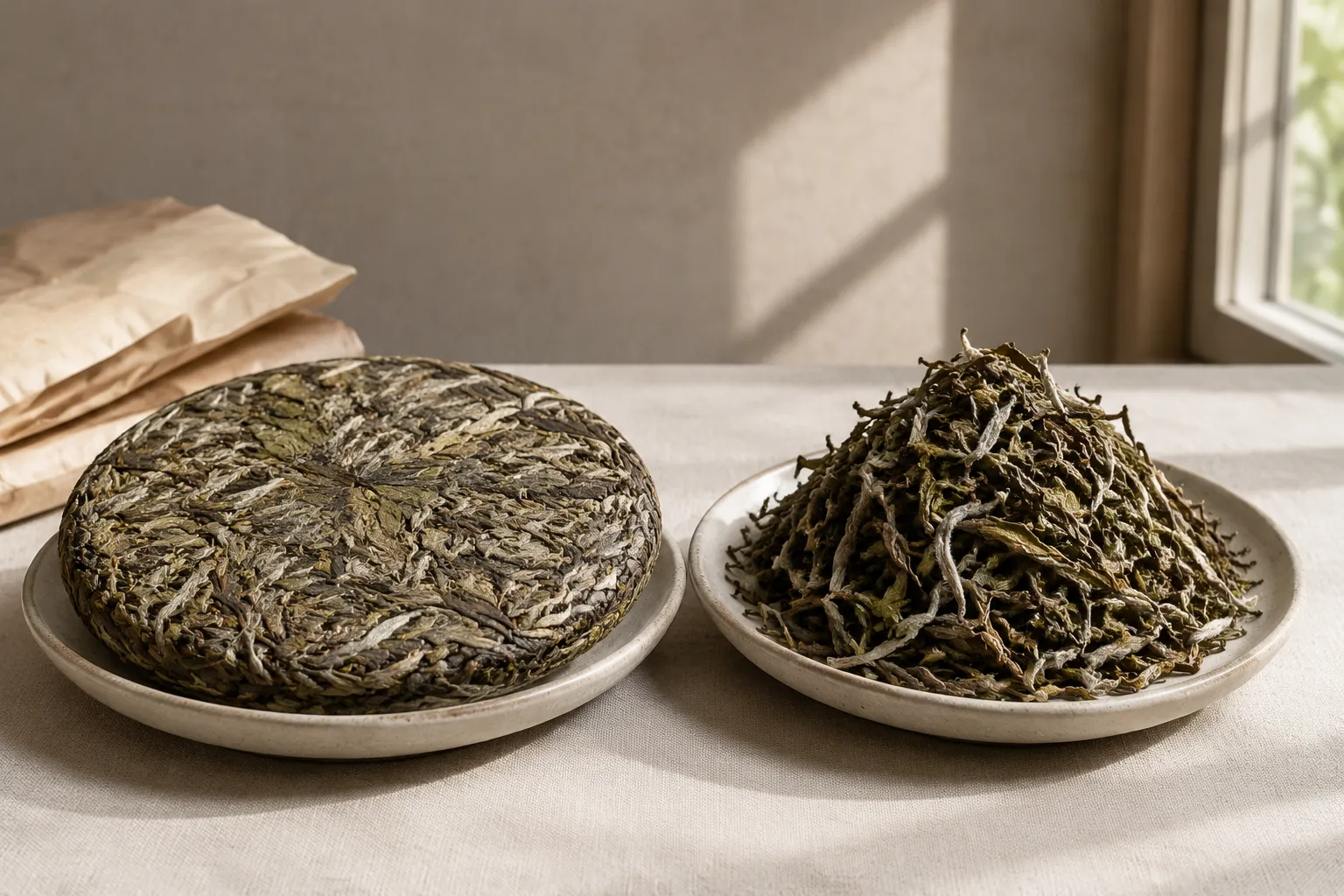
A cake gathers the leaf into a compressed mass; loose tea remains separated. This physical difference affects how easily you can inspect and portion the material, how much breakage occurs during preparation, and how the leaves open in a gaiwan.
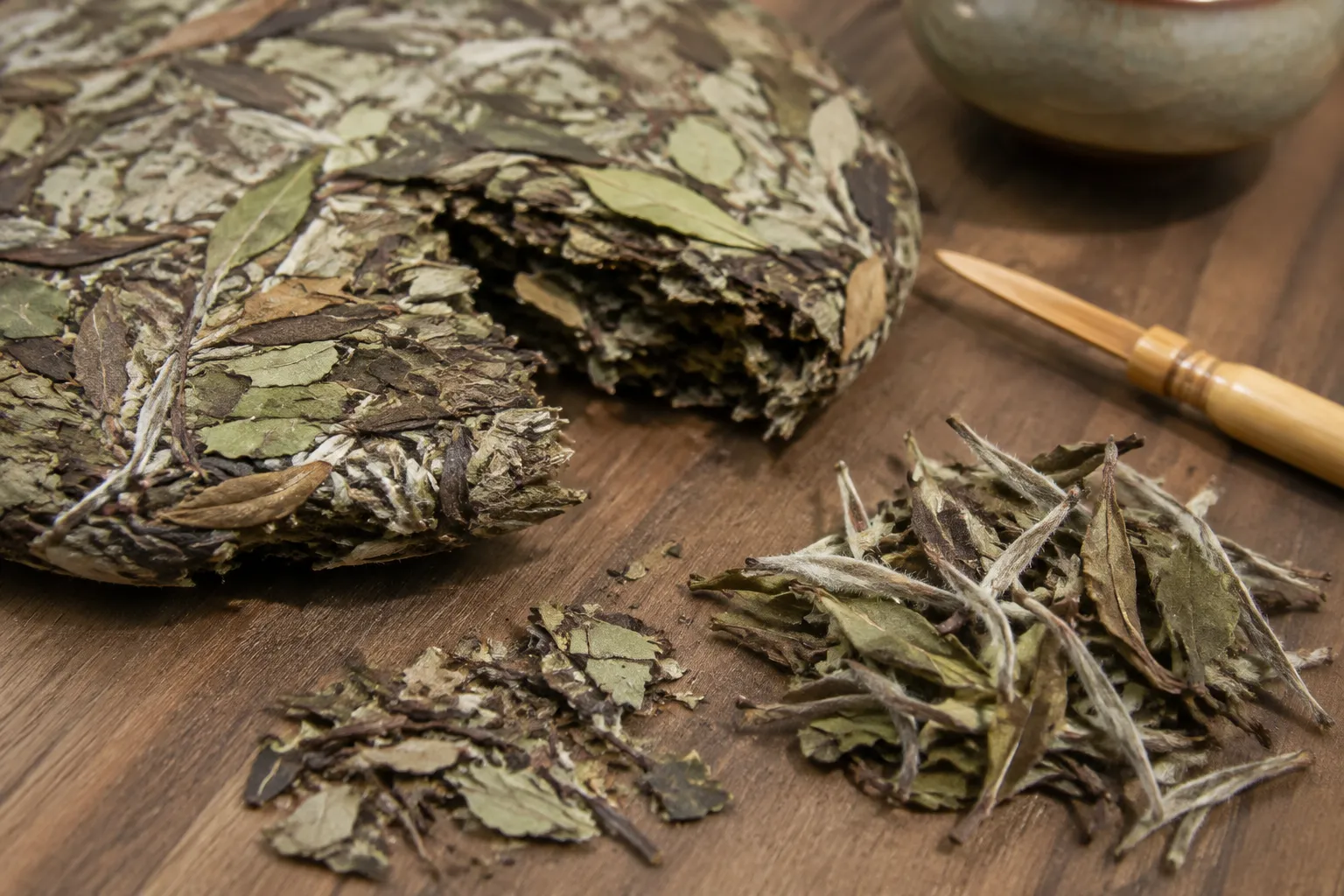
Not every cake is pressed alike. A lightly compressed cake that separates into recognizable leaves presents a different preparation experience from a dense cake that produces many fragments when pried apart. That difference can change extraction in the next steep even before long-term storage is considered.
Packaging adds another variable. A paper wrapper, sealed bag, box, or layered enclosure creates a different storage context, and the format alone does not reveal what temperature, humidity, or surrounding aromas the tea encountered. White-tea-specific research available for this page is not strong enough to assign a consistent aging pattern to compression, airflow, or moisture exchange.
Start with the material rather than the shape. Check the leaf grade, processing description, harvest information, pressing density, packaging, and storage history. Without that context, a cake label cannot explain how the tea changed.
The variables behind the cup
Leaf material and processing
Silver Needle, White Peony, Gongmei, and Shoumei do not begin with the same proportions of buds, leaves, and stems. Those differences can shape aroma, body, liquor color, and infusion behavior before storage enters the comparison.
A Silver Needle cake beside loose-leaf Shoumei would therefore tell you little about compression by itself. The starting materials are already too different. A more useful comparison uses the same grade or closely matched material, similar harvest information, and a comparable processing description.
Processing before pressing matters as well. Compression does not erase the condition of the leaf that went into the cake. When that history is unclear, treat format as one visible clue rather than the full explanation.
Compression density
Pressing density is easy to observe but difficult to translate into a universal aging forecast. Record whether the cake is lightly or tightly compressed, whether the surface and interior look similar, and whether the material separates cleanly.
These details are useful at the brewing table. A dense piece may hydrate slowly, while fragments from prying can extract quickly and make the cup seem stronger. That is an immediate preparation effect, not proof of how the cake developed during storage.
Storage conditions
Temperature, humidity, packaging, exposure to odors, and changes in environment may all affect the condition in which a tea reaches you. An age statement without storage context leaves much of that history unknown.
Smell the wrapper and dry material before brewing. A strong surrounding odor may come from packaging or the storage environment rather than from the leaf’s development. Note it, then check whether it persists in the warmed leaf and liquor.
The same uncertainty applies to loose tea. A printed harvest year provides useful context, but it does not document every condition experienced after processing. Age begins the inquiry; it does not settle it.
How to compare cake and loose leaf
A side-by-side session can show whether two samples present differently. It cannot establish age or isolate compression unless the materials and their histories are closely matched.
Begin by recording what you know:
- Variety or leaf grade
- Proportions of buds, leaves, and stems
- Harvest information
- Processing description
- Cake density and visible breakage
- Packaging and stated storage history
Inspect the dry material next. Note color, apparent dryness, intact leaves, fragments, and any difference between the surface and interior of the cake. These observations describe the sample; they do not confirm its date or provenance.
Smell each tea dry and after warming the vessel. Floral, hay-like, woody, sweet, grassy, muted, or storage-led aromas can help you compare the samples without turning any one note into an age marker.
For brewing, keep the gaiwan, water, leaf amount, water temperature, and steep time as consistent as practical. Weigh the cake after separating it, and include a reasonable mix of intact material and smaller pieces rather than selecting only the most attractive section. If one sample needs extra time to open, record that instead of immediately changing several controls.
Across several infusions, compare:
- 01How quickly each sample releases aroma
- 02Whether the texture feels light, full, dry, or rounded
- 03How the liquor color changes
- 04How evenly the material opens
- 05How long recognizable character remains
- 06Whether the differences persist after a small timing adjustment
What you observe belongs first to those two samples. If the cake releases a darker, fuller first infusion, fragments or slower hydration may be relevant. If its aroma remains distinct across multiple steeps, storage, processing, and starting material still need to be considered alongside format.
Common misunderstandings about cake aging
Compressed shape is not a quality verdict
A compressed shape does not by itself indicate superior development. A cake may present differently under particular conditions, but appearance alone cannot explain why.
Liquor color and aroma are not age tests
Darker liquor is also not a dependable age test. Leaf amount, temperature, steep time, processing, grade, and broken material can all deepen the cup. Aroma offers useful tasting evidence, but no single woody, sweet, or dried-fruit note confirms a harvest date.
Unlike grades obscure the format comparison
Another common mistake is comparing unlike grades. Mature leaves and stems may produce a different body from bud-heavy material regardless of whether either sample was pressed. Hold the starting material steady before assigning the difference to compression.
Enjoyment does not verify the label
Finally, an enjoyable cup does not confirm authenticity, storage history, rarity, or future value. Sensory quality and label verification are separate questions.
What to check before buying
When considering an aged white tea cake, ask for details that make later comparison possible:
- What grade or material was pressed?
- What harvest information is available?
- How was the tea processed before compression?
- Is the cake lightly or tightly pressed?
- How has it been packaged?
- What storage history can the seller describe?
- Which details are documented, and which are tasting or market language?
- Is a sample available before buying a full cake?
- Is there comparable loose leaf from the same material?
An age statement accompanied by specific harvest, processing, packaging, and storage information gives you more to examine than broad language about transformation. None of those details predicts the final cup, but together they reduce uncertainty.
The practical answer
White tea cakes may age and taste differently from loose leaf because their physical form, handling, packaging, and storage histories can differ. The available material does not establish compression as a reliable predictor of aging speed, aroma development, or quality.
For a useful comparison, choose closely matched material and brew it under the same controls. Inspect the dry leaf, note the storage smell, and follow aroma, texture, liquor color, and opening rate across several infusions. Change one brewing variable at a time in the next session; that will tell you more about the tea in front of you than the cake shape or age label alone.