
Brewing guide
White Tea Brewing Temperature and Steeping Time
A pale white tea cup can turn sweet, thin, woody, or sharp from the same leaves. The shift usually comes from four controls: water heat, contact time, vessel size, and leaf amount. That is why white tea brewing temperature is better treated as a working range than a single rule. Start gentler when the tea is tender, whole, and fragrant; move hotter when the leaf is larger, older, compressed, or slow to open.
White tea steeping time follows the same logic. A short infusion can preserve lift and aroma. A longer one can bring body, color, and deeper sweetness. The useful question is not only how hot to brew white tea, but what the leaves show after the first cup.
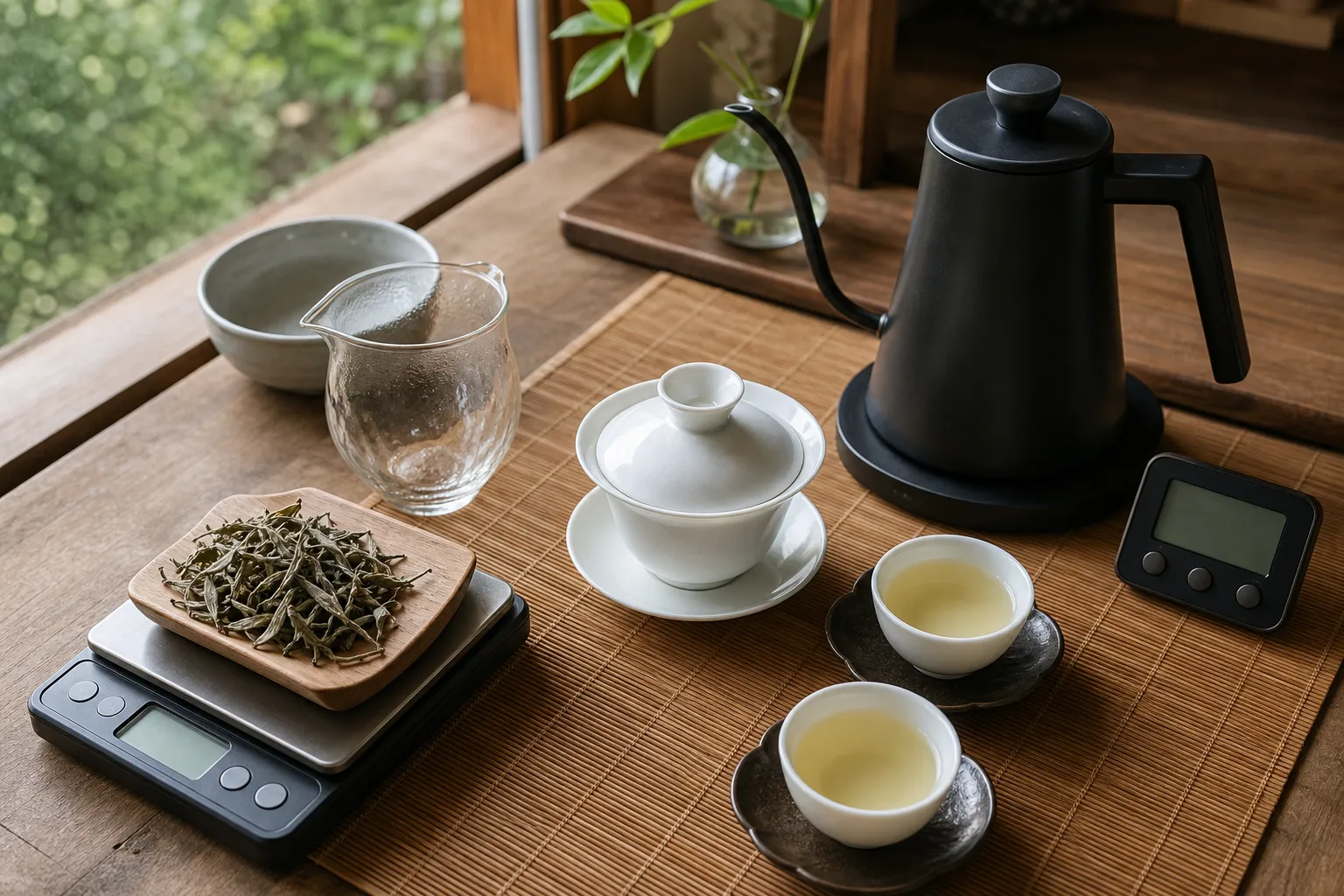
upward
Read the full overview first
Use the broader guide first if you need the full scope before this page.
A practical starting point for white tea temperature and time
For most everyday brewing, begin below a rolling boil and use a moderate first steep. This gives the liquor room to show sweetness, hay, flower, melon, dried herb, or soft wood before heat and time make the cup heavier.
If the brew tastes flat or watery, raise the water temperature, extend the steep, or use a little more leaf. If it tastes harsh, drying, or muddled, reduce one control before blaming the tea itself.
Cooler water
Suits tender buds, fragrant early harvest teas, and cups where softness matters more than body.
Middle heat
Works as a steady starting point for mixed buds and leaves, including many White Peony sessions.
Hotter water
Can help larger leaves, aged material, compressed pieces, and later infusions release more color and structure.
Steeping time should follow the vessel. A gaiwan with more leaf and less water usually needs shorter pours. A mug, basket infuser, or larger teapot often needs longer contact because the leaf-to-water ratio is lower. If you change the vessel but keep the same timing, the cup may seem inconsistent; the issue may be geometry, not the tea.
The current source set for this page does not support exact universal temperature and time ranges. The guidance here stays practical: use the cup as feedback, avoid treating any chart as final, and adjust by leaf style, vessel, aroma, sweetness, dryness, and liquor color.
What changes the answer: leaf style, size, and condition
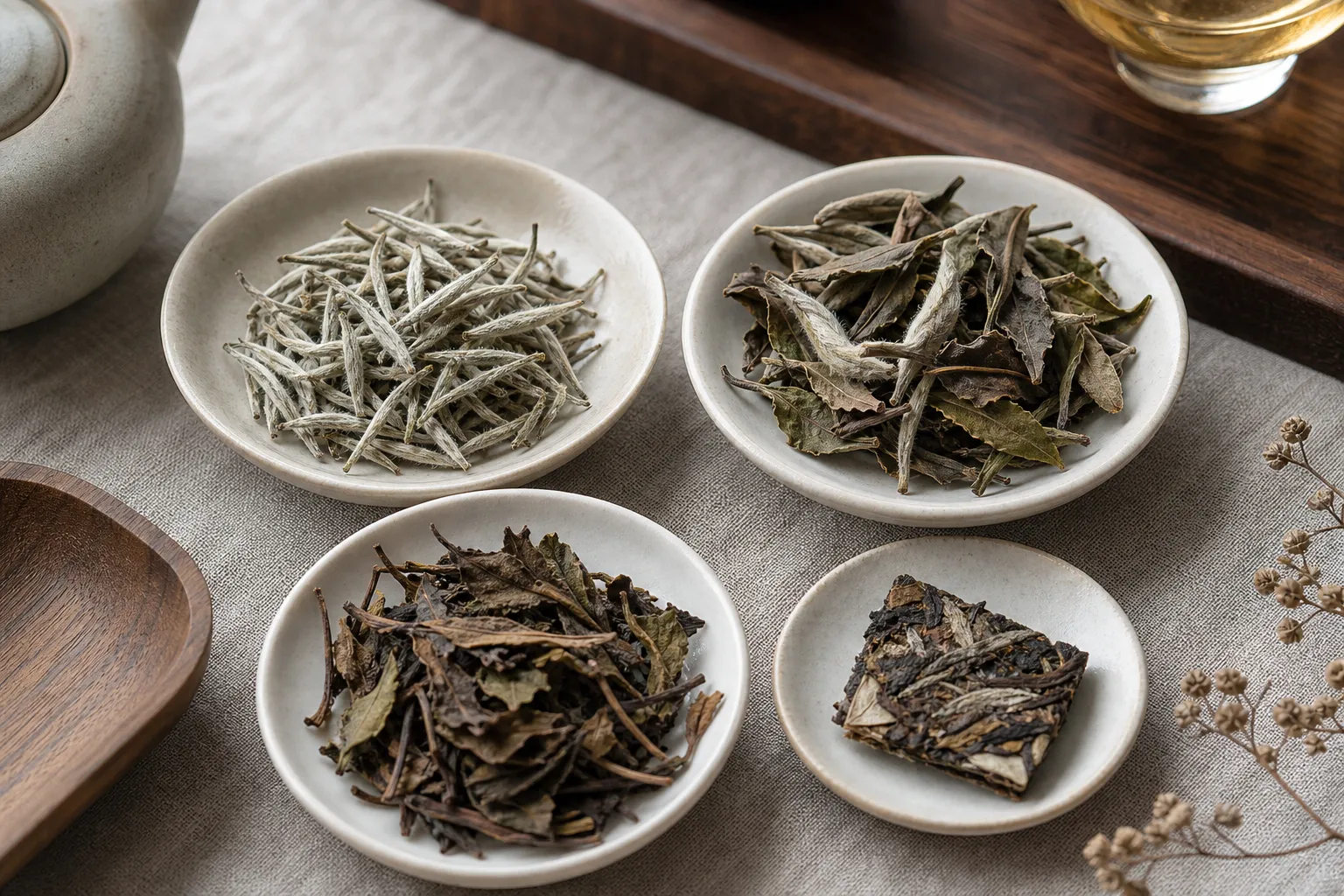
The dry leaf is the first clue. Silver Needle is mostly buds, often covered with fine down. Those buds can look fragile, yet their compact whole structure may resist quick extraction. That is why Silver Needle steeping time often feels longer than beginners expect. A very quick infusion may smell lovely but taste almost weightless. If the cup is clean but faint, keep the water gentle and extend contact, or move slightly warmer while watching the finish.
White Peony contains buds and open leaves. It usually gives more immediate color and body than an all-bud tea because the leaves expose more surface area. Middle heat and a moderate steep often reveal the best balance: bud fragrance, leaf sweetness, and a little texture. If the pieces are broken, shorten the first brew or lower the heat, because small fragments release flavor quickly.
Gongmei and Shoumei often include larger, more mature leaves. They can handle stronger brewing choices in many sessions, especially when the tea is older or has lost some fresh green edge. Hotter water may bring dried fruit, wood, herb, or date-like tones, but it can also expose rough storage notes. Taste before you push harder.
Compressed white tea cakes add another variable. A tight piece needs time to loosen. The first infusion may be pale because the chunk has not opened; the second or third may deepen quickly. Loose leaf white tea usually responds faster because water reaches more surface at once. White tea cake steeping time depends on compression, chunk size, and whether the layers have started to separate.
A simple rule holds across styles: whole, intact, or compressed material usually needs patience; broken, small, or already-open leaves need restraint.
Fresh vs aged white tea brewing temperature
Fresh and aged white tea are often discussed as if age alone decides the brewing method. It does not. Age can change aroma, color, and texture, but storage condition, leaf style, compression, and handling matter too. A fresh Silver Needle and a fresh White Peony do not behave the same. An aged loose Shoumei and an aged cake do not behave the same either.
Fresh white tea often benefits from a careful start. Cooler water can keep the cup lighter and more aromatic, especially when the leaves smell grassy, floral, or quietly sweet. If the first infusion is thin, increase time before making the kettle much hotter. A small adjustment is easier to read.
Aged white tea often invites hotter water because the leaf may need more heat to show depth. But “aged” on a label is not proof of quality, storage condition, or flavor. If the dry leaf smells clean, woody, sweet, herbal, or gently dried-fruit-like, hotter brewing may bring structure. If it smells musty, sour, unpleasantly smoky, or strangely flat, heat can make those problems more obvious.
For fresh vs aged white tea brewing temperature, let aroma lead. Fresh and fragrant: start gentler. Older, larger, compressed, or muted: move warmer. Questionable storage smell: brew cautiously and judge the cup, not the age claim.
When to use cooler water for white tea
Cooler water is useful when you want the cup to stay soft, fragrant, and less drying. It is especially helpful for fine buds, pale liquor, light floral aroma, or a fresh green edge. It can also help in a small vessel with a generous leaf amount, where concentration rises quickly.
Use cooler water when the tea gives these signals
- The aroma is high and fresh, but the taste turns sharp with hotter water.
- The liquor becomes drying before it becomes sweet.
- Broken leaves or small particles make the cup heavy too quickly.
- You are using a long steep in a mug or large pot.
- You want to compare fragrance and aftertaste before pushing body.
Cooler water has a tradeoff. It can make a cup graceful, but it can also make it weak. If the liquor looks nearly clear, the aroma fades fast, and the finish disappears, the brew may need more time, more leaf, or warmer water. Do not keep lowering heat only because white tea is often described as gentle. Some leaves need more encouragement.
Without a thermometer, cooler water is a behavior rather than a number. Bring the kettle up, then wait until the water settles and the hard bubbling stops. Pre-warming the vessel matters too; a cold mug or gaiwan can pull heat away and make a careful infusion taste thinner than intended.
When hotter water makes more sense
Hotter water can help when the leaves are large, thick, compressed, older, or slow to release flavor. It can also help in later infusions, after the first cups have opened the material and the easy aromatics have faded. If the liquor is pale but the wet leaves smell promising, heat may be the missing control.
Use hotter water when the tea gives these signals
- The wet leaf smells sweet, woody, or fruity, but the cup tastes hollow.
- A compressed piece has not opened after the first infusion.
- Later brews lose body even though the leaves still smell active.
- Larger Gongmei or Shoumei leaves produce color slowly.
- You want more warmth, depth, and structure rather than only top aroma.
Boiling water is where many drinkers disagree. Can you brew white tea with boiling water? Sometimes, especially with larger, older, or compressed leaves, it can produce a satisfying cup. It is not a universal starting point. On tender buds, broken leaves, or very fresh material, the same heat can make the liquor rough or flatten the fragrance.
If you want to test near-boiling water, compare carefully: same leaf amount, same vessel, one hotter infusion. Then taste for sweetness, aroma clarity, texture, and dryness. Hotter brewing is not a badge of seriousness. It is one tool, useful when the leaves are asking for strength.
How leaf amount changes white tea steeping time
Leaf amount can change white tea steeping time as much as temperature does. A small gaiwan packed with leaf may need quick pours. A large mug with a light pinch may need a much longer steep to reach the same intensity. If you copy a time without copying the leaf ratio and vessel size, the result may not translate.
More leaf usually means shorter contact. The cup gains aroma and body quickly, and repeated infusions become easier to manage. This style is useful when you want to observe change: first fragrance, then sweetness, then deeper body, then softer later cups. It also makes flaws easier to notice, so reduce time if the finish turns dry.
Less leaf usually means longer contact. This can suit casual brewing in a mug or pot, especially when you do not want to manage many small infusions. The risk is dullness: too little leaf with cautious water can taste like warm aroma rather than tea. If that happens, add leaf before stretching every steep.
Broken pieces behave like more leaf because they expose more surface. Whole buds and intact leaves behave more slowly. A compressed cake chunk may start slowly and then release quickly once it opens. Watch the wet leaf; if it has fully unfurled and the previous cup was already strong, shorten the next steep or reduce heat.
How steeping time changes across multiple white tea infusions
Multiple white tea infusions are not repeats. The first steep wakes the leaf and shows the easiest aromatics. The middle steeps often carry the most complete balance of aroma, color, sweetness, and texture. Later steeps may need more heat or time as the leaf gives less with each pour.
In a gaiwan, the first infusion may be brief if you use plenty of leaf, but Silver Needle or compressed tea may still need more patience than expected. For White Peony, the second and third infusions can become fuller as the leaves open. For Gongmei and Shoumei, later cups may become warmer, rounder, or more woody, especially if the water temperature rises gradually.
In a mug or teapot, the pattern is slower and less segmented. You may brew once, top up, then brew again with warmer water. The judgment is the same: if the liquor fades but the wet leaf still smells active, extend the next contact. If the cup becomes drying, shorten it or add water to soften the concentration.
Liquor color helps, but it should not be the only signal. Some white teas stay pale while tasting full. Others darken quickly because of leaf size, age, or broken material. Use color beside aroma and texture: pale but sweet may be fine; dark but harsh may be overdrawn.
Common mix-ups around white tea water temperature
One leaf type
Silver Needle, White Peony, Gongmei, Shoumei, loose tea, and cake tea can all sit under the same broad name, but they do not release flavor at the same pace.
Cooler is always better
Gentle heat can protect fragrance, but it can also hide body. If a tea tastes like scented water, the answer may be warmer water, longer contact, more leaf, or a smaller vessel.
Hotter is always more complete
Strong heat can reveal depth, but it can also magnify roughness. If a cup becomes bitter, drying, or blunt, heat may be too high for that leaf condition or vessel.
Market language over the cup
Brewing can help you evaluate what is in front of you, but it cannot confirm a market claim. Check appearance, dry aroma, wet-leaf smell, compression, wrapper context, seller information, and storage condition together.
Then brew gently enough for the tea to show both strengths and problems.
A small decision frame for the next cup
Start by looking at the leaf. Fine buds, fresh aroma, and pale intact material suggest a gentler first brew. Mixed buds and leaves invite a middle path. Large leaves, older tea, compressed chunks, or later infusions may need more heat or time.
Choose one adjustment at a time
- If the cup is thin, increase time before changing everything else.
- If the aroma is good but the body is weak, use warmer water or more leaf.
- If the finish is dry, shorten the steep or lower the heat.
- If a cake piece stays closed, give it more time to open before judging.
- If later infusions fade, raise heat or extend contact gradually.
White tea brewing becomes easier when temperature and steeping time are treated as linked controls, not separate rules. Keep the same leaf and vessel, change only one variable, and let aroma, liquor color, sweetness, texture, and aftertaste decide the following pour.