
Cold water brewing
Cold Brew White Tea
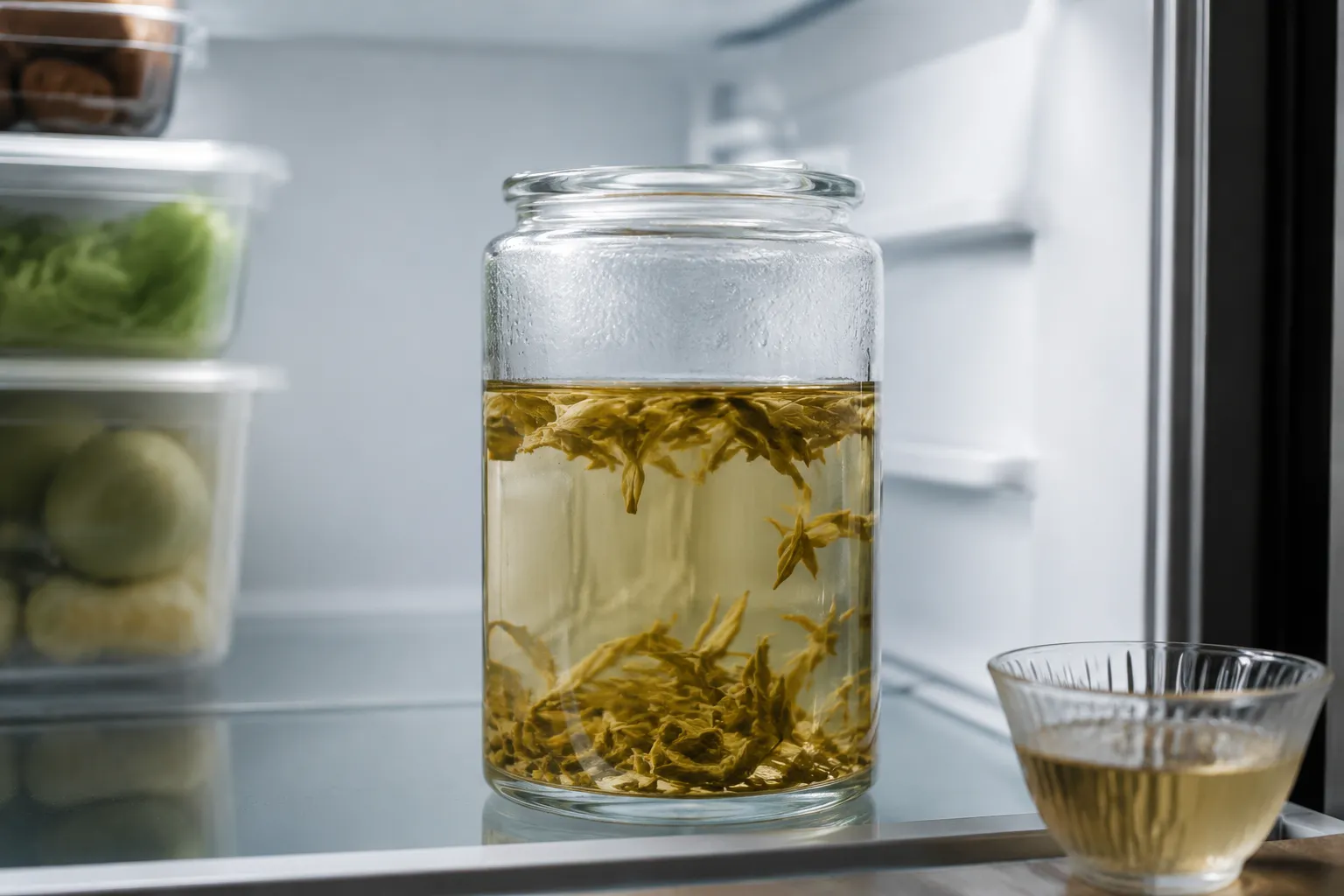
A pale jar of cold brew white tea can look almost too quiet at first: soft gold liquor, floating buds and leaves, little visible drama. The real question is how to keep that jar from tasting thin, grassy, flat, or unexpectedly heavy.
A useful starting point is simple: use a clean covered jar, add loose white tea, fill with cold water, refrigerate, begin tasting around 6 hours, and strain when the flavor feels complete.
The answer changes with leaf style, leaf amount, water volume, refrigerator time, and whether you serve it plain or over ice. Cold water can make white tea feel smoother than a hot infusion, but it does not make the cup automatically sweet, caffeine-free, or impossible to oversteep.
upward
Start with the broader guide
Use the broader guide first if you need the full scope before this page.
How to Cold Brew White Tea Without a Watery Cup
For a first batch, start with 1.5–2 teaspoons of loose white tea per 8 ounces / 240 ml of water. If you use a scale, this often lands near 2–3 grams per 240 ml, though white tea leaf size makes spoon measurements uneven. Fluffy Silver Needle fills a spoon quickly; broken Shoumei or compressed cake pieces can pack in much more actual leaf.
Use the ratio as a starting point, not a rule:
Cold steep white tea needs enough leaf because cold water is gentle. If the liquor looks pale and tastes like scented water after several hours, the problem is usually not that white tea cannot be cold brewed. More often, the batch needs more leaf, more time, or a tea style with more body.
A clean glass jar, covered pitcher, or bottle with room for the leaves to open is enough. Avoid a cramped infuser basket for large leaf-and-bud teas; White Peony and Shoumei release aroma more evenly when the leaves can expand. If you use a narrow bottle, strain into another clean container before serving.
A practical first pitcher
- Add loose white tea to a clean jar or covered pitcher.
- Add cold water. Filtered water can help if tap water tastes strongly chlorinated or mineral-heavy.
- Cover and refrigerate.
- Taste around 6 hours.
- Strain when the aroma, sweetness, and body feel balanced.
- Keep the finished tea refrigerated.
That first batch is a calibration pitcher. Write down the leaf amount, water volume, and time if you want the next jar to be easier to repeat.
How Long to Cold Brew White Tea in the Fridge
Most home cold brew white tea lands somewhere between 6 and 12 hours in the refrigerator. Many lighter teas are worth checking around 6–8 hours; an overnight white tea brew is convenient, but it is not a technical requirement.
Time matters because extraction is not only about temperature. Research on green tea brewing conditions has found that brewing time and water temperature can affect extracted compounds, color, bitterness, and sensory response. That study was not about cold brew white tea, so it should not be treated as a recipe authority. It supports the broader brewing principle: time and temperature change what reaches the cup.
At 4–5 hours
The cup may smell faintly floral but taste thin.
At 6–8 hours
Many batches begin to show clearer aroma, light sweetness, and a soft body.
At 10–12 hours
Fuller leaf styles may taste rounder, while some delicate or broken teas may begin to feel heavy or stale.
Past overnight
Results become more leaf-dependent; taste before assuming longer is better.
If your schedule only allows overnight steeping, reduce the leaf slightly for the first attempt. If you want to drink it the same afternoon, increase the leaf a little and start tasting earlier.
Room-temperature steeping appears in some household methods, but refrigerator steeping is the steadier choice here. University extension guidance for brewed and cold brewed tea points toward clean equipment, covered containers, refrigeration, and avoiding long warm holding. For the cup in front of you, that simply means the fridge is the right place for a slow white tea infusion.
Can You Steep White Tea in Cold Water?
Yes. Cold brew tea generally means tea leaves steeped in cool or cold water over a longer period instead of being brewed quickly with hot water. With white tea, this method can highlight soft hay, melon, floral, honeyed, or dried-fruit notes, depending on the leaf style and storage condition.
The confusion usually comes from mixing up four different drinks:
- Hot tea poured over ice: fast extraction, then dilution and chilling.
- Hot concentrate diluted with cold water or ice: stronger at first, often with more hot-brew sharpness.
- Cold steeped tea: slower extraction in cold water, usually in the refrigerator.
- Sun tea or warm-room tea: not the method recommended for this page.
Cold brewing often feels gentler because cooler water extracts flavor differently from hot water. Many drinkers perceive less sharpness and less drying astringency. Still, “less harsh” is not the same as “never bitter.” A long steep, too much leaf, broken material, stale storage, or a rough tea can still produce a cup that feels heavy, woody, or unpleasant.
Caffeine also needs a careful frame. Cold brewing may extract less caffeine than a comparable hot brew in many preparations, but the finished cup is not caffeine-free unless the tea itself is decaffeinated. Even decaffeinated tea may contain trace caffeine depending on processing. Leaf type, dose, water volume, time, temperature, and serving size all matter, so cold brewing should not be treated as a precise caffeine control.
Silver Needle, White Peony, Gongmei, and Shoumei in Cold Water
The best cold brew white tea for your jar depends less on prestige language and more on leaf structure. Bud-only tea, leaf-and-bud tea, mature-leaf tea, and compressed tea behave differently in cold water.
Cold Brew Silver Needle White Tea
Silver Needle is made from buds, so the liquor can stay very pale. A successful batch may smell like fresh hay, cucumber, melon rind, soft florals, or light honey. It may not have a thick body unless you use enough leaf.
This is where many watery cups happen. The dry buds are fluffy, so one teaspoon may contain less tea than expected. If cold brew Silver Needle tea tastes barely there after 6–8 hours, try more leaf before pushing the steep far past overnight. More buds often keep the aroma cleaner than forcing a very long extraction.
Best adjustment: increase the amount of buds, then taste again at 6–8 hours.
Cold Brew White Peony Tea
White Peony has buds and open leaves, which often makes it more forgiving in cold water. It can bring floral aroma, light fruit, soft hay, and more body than Silver Needle. If you want cold brew white tea that does not feel too faint, White Peony is often a sensible first choice.
The leaf material can vary widely. A fine, tidy White Peony may stay clean and sweet through a longer steep; a rougher or more broken version may show woody or drying notes sooner. If the cup tastes sharp, shorten the next batch or use a touch less leaf.
Best adjustment: keep the ratio moderate and strain when the floral note is clear.
Cold Brew Gongmei and Shoumei White Tea
Gongmei and Shoumei usually contain more mature leaves than Silver Needle or White Peony. In cold water, they can produce a deeper color and more rounded body. Depending on the tea, you may notice dried leaves, autumn hay, jujube-like sweetness, light herbs, or a mellow woody edge.
Cold brew Gongmei white tea and cold brew Shoumei white tea can be satisfying when you want more body, especially if the tea is not too broken or dusty. Older white tea may bring darker, softer notes, but age claims should be judged cautiously from appearance, aroma, storage smell, wrapper context, and seller information rather than assumed from marketing language alone.
Best adjustment: start with a slightly lower ratio if the leaves are broken or compressed, then extend time if the cup is too light.
Fresh vs Aged White Tea, Loose Leaf vs Tea Cake
Fresh vs aged white tea is not a simple better-or-worse choice for cold brewing. Fresh white tea often brings brighter meadow, floral, cucumber, melon, or fresh hay notes. Older white tea, when well stored, may lean toward deeper dried-fruit, herb, grain, or woody tones. Poor storage can flatten either one.
Cold water is revealing in a quiet way. It will not always cover stale storage aromas the way a strong hot brew might. If the dry leaf smells musty, sour, unintentionally smoky, or oddly damp, cold brewing will not necessarily make it pleasant.
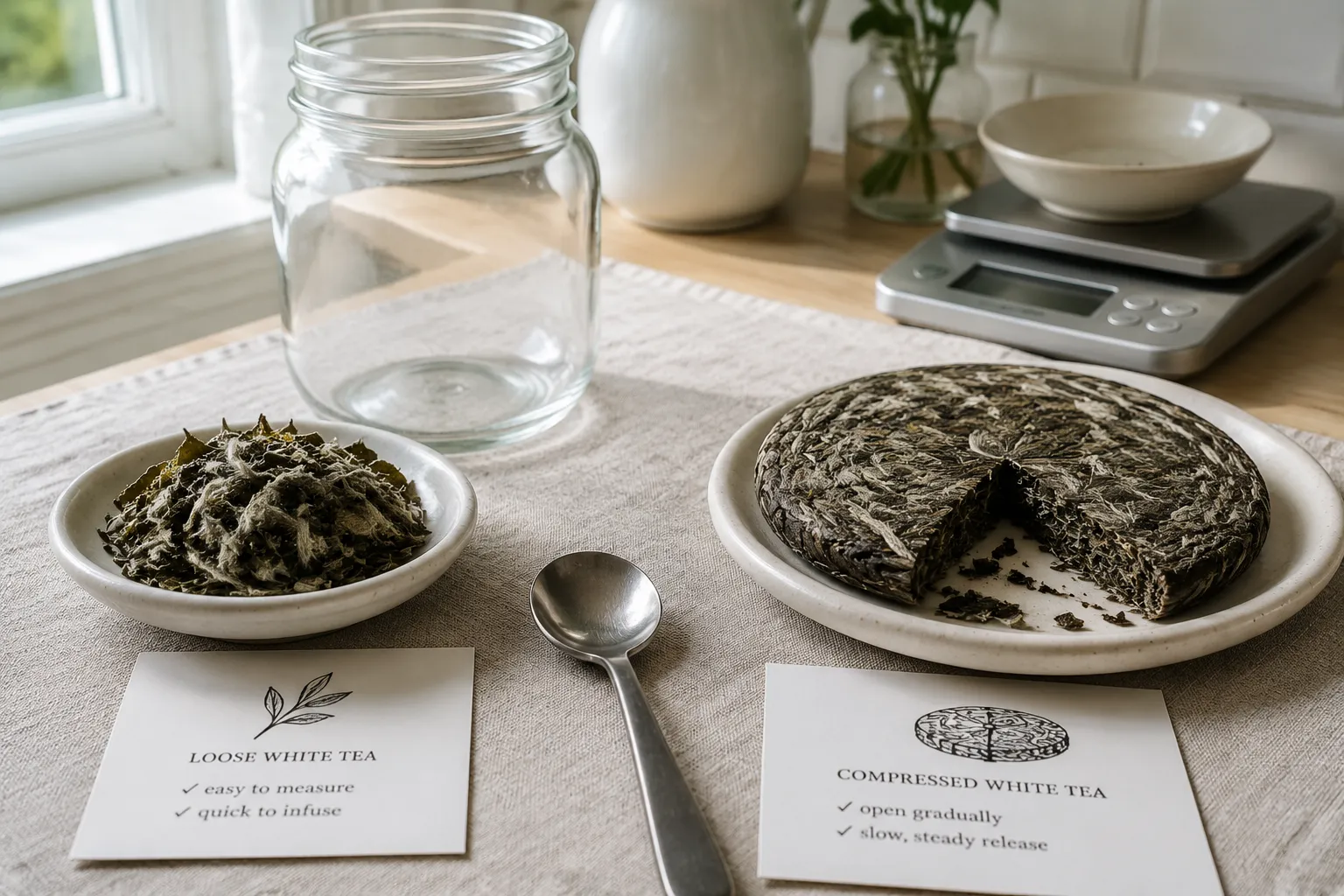
Loose leaf is easier for a first batch. It hydrates evenly, is simple to measure, and strains without much fuss. Tea cake can also work, but compressed pieces need attention:
- Break off a clean piece rather than grinding it into dust.
- If you rinse for taste, use clean tools and avoid leaving wet leaves at room temperature.
- Give compressed pieces more room and time to open.
- Expect the first cold steep to be uneven if the chunk stays tight.
Loose leaf vs tea cake is mainly a control question. Loose tea gives clearer measurement; cake tea gives a different storage and leaf-form experience, but it asks for more patience.
Why Cold Brew White Tea Tastes Weak, Bitter, or Flat
Cold brew troubleshooting works best when you change one variable at a time. If you change leaf amount, time, water volume, and serving style all at once, you will not know what fixed the cup.
If the tea tastes weak
A weak batch usually has one of four causes: not enough leaf, too much water, too short a steep, or a very light tea style. Silver Needle is the common example because the liquor may stay pale even when the aroma is present.
Try this next time:
- Add 25–50% more leaf.
- Taste at 6 hours, then again at 8 hours.
- Use less water if you plan to pour over ice.
- Choose White Peony or Shoumei if you want more body.
Do not judge only by color. Some cold steep white tea stays pale but tastes complete.
If the tea tastes bitter or heavy
Cold brew can become unpleasant with too much leaf, a long steep, broken material, or storage notes that already lean rough. The fix for the current batch is simple: strain it and dilute with cold water. Serving over ice can also soften intensity, though it will thin the aroma.
For the next batch:
- Use less leaf.
- Taste earlier.
- Strain before going to bed if it already tastes full in the evening.
- Avoid leaving leaf in the finished tea for casual all-day sipping.
The useful lesson is not that cold brew always stays gentle. It is that cold water gives you a wider tasting window, but the leaf still has a limit.
If the tea tastes flat or stale
Flatness is different from weakness. A weak cup lacks concentration; a flat cup may have enough color but little lift. Possible causes include old leaf, poor storage, water that tastes dull, an unclean container, or brewed tea held too long.
Smell the dry leaf before brewing. Then smell the wet leaves after straining. If both smell muted, dusty, damp, or tired, changing the ratio may only help a little. For the next pitcher, use fresher leaf, cleaner-tasting water, and a covered container.
Storing the Finished Tea
Cold brew white tea should be handled like a fresh prepared drink. Use clean equipment, keep the jar covered, steep in the refrigerator, strain with clean tools, and return the finished tea to the fridge. University extension sources support the same practical direction for brewed tea: clean handling, covered storage, and refrigeration.
For home use, make a small batch you can drink within a short window rather than a large pitcher that lingers for many days. If the tea develops an off smell, unusual cloudiness, sourness, or a texture that seems wrong, discard it. Do not try to rescue a questionable batch with ice, sweetener, or more tea.
The easiest habit is to brew what you will drink the next day: start it in the evening, taste in the morning, strain when ready, and keep it chilled.
A Simple Decision Frame for Your Next Pitcher
If this is your first cold brew white tea, choose White Peony or a clean Shoumei, use about 2 teaspoons per 8 ounces / 240 ml, refrigerate, and taste around 6 hours. If it is too light, add more leaf next time. If it is too strong, strain earlier or dilute the batch in front of you.
For Silver Needle, trust aroma more than color and use enough buds. For Gongmei or Shoumei, watch body and storage notes. For tea cake, allow the pieces to open without turning them into dust.
Cold brewing is not a promise of sweetness, low caffeine, or flawless smoothness. It is a slower way to read the leaf. The next useful control is the one you can actually change: leaf amount, refrigerator time, water volume, or the white tea style in the jar.
Sources
Sources and further reading
Reference links are limited to sources considered suitable for public citation in this page.